A dairy business might succeed or fail based on the quality of its purification. Advanced technology is needed to sell every glass of milk, batch of yoghurt, and block of cheese. Dairy processors use reverse osmosis to get more milk solids, get back valuable whey proteins, and make smaller amounts of product while keeping quality high and costs low. This is done while consumers expect safer products, and rules get stricter.
Here, reverse osmosis technology completely changes dairy production.
Understanding Reverse Osmosis and Membrane Filtration of Milk
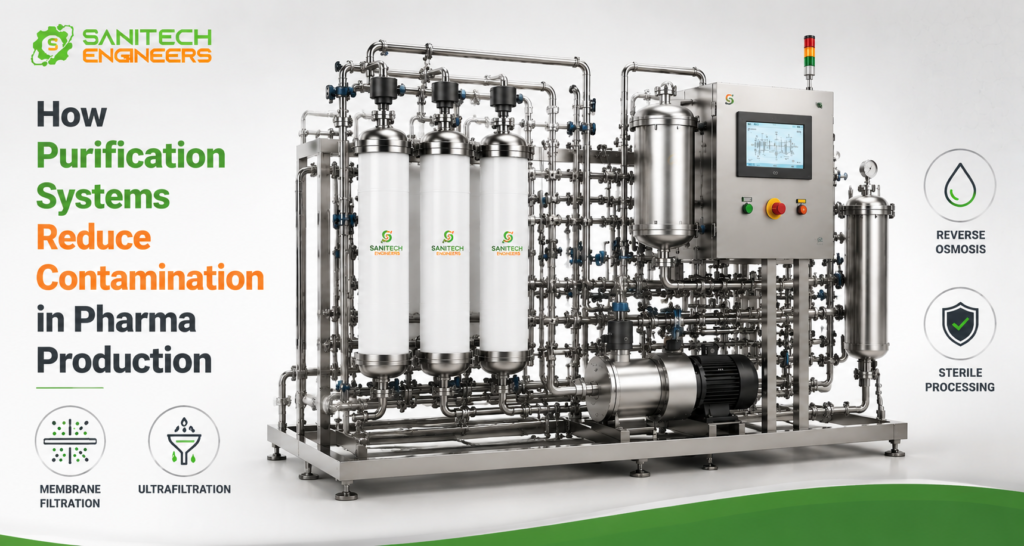
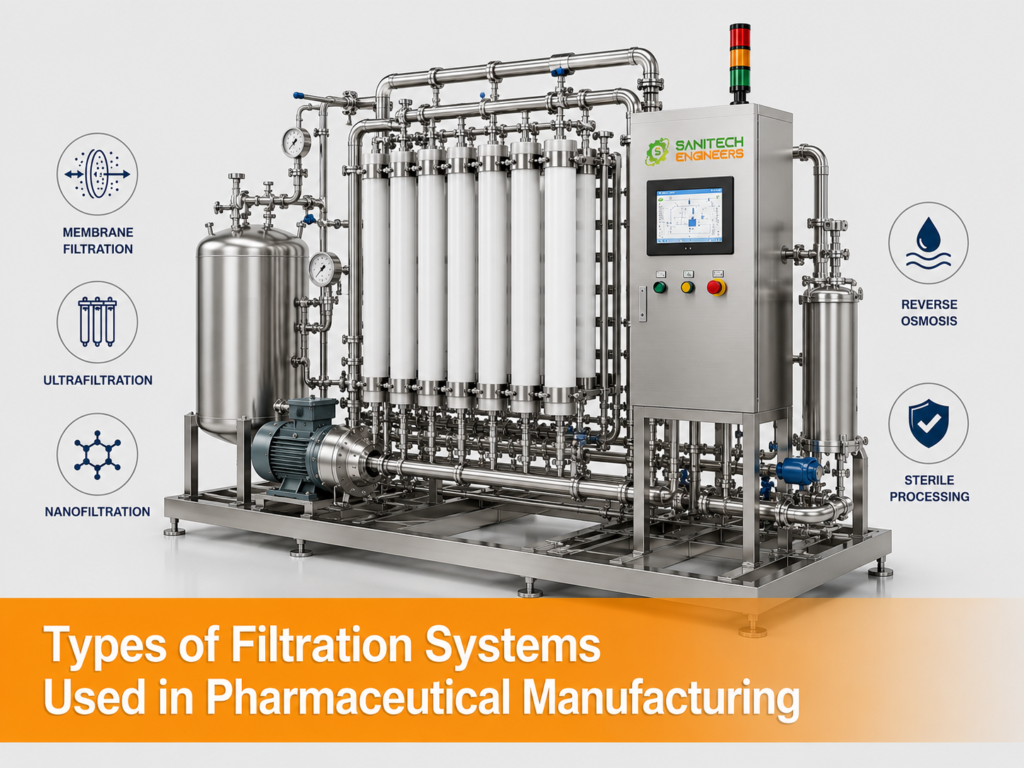
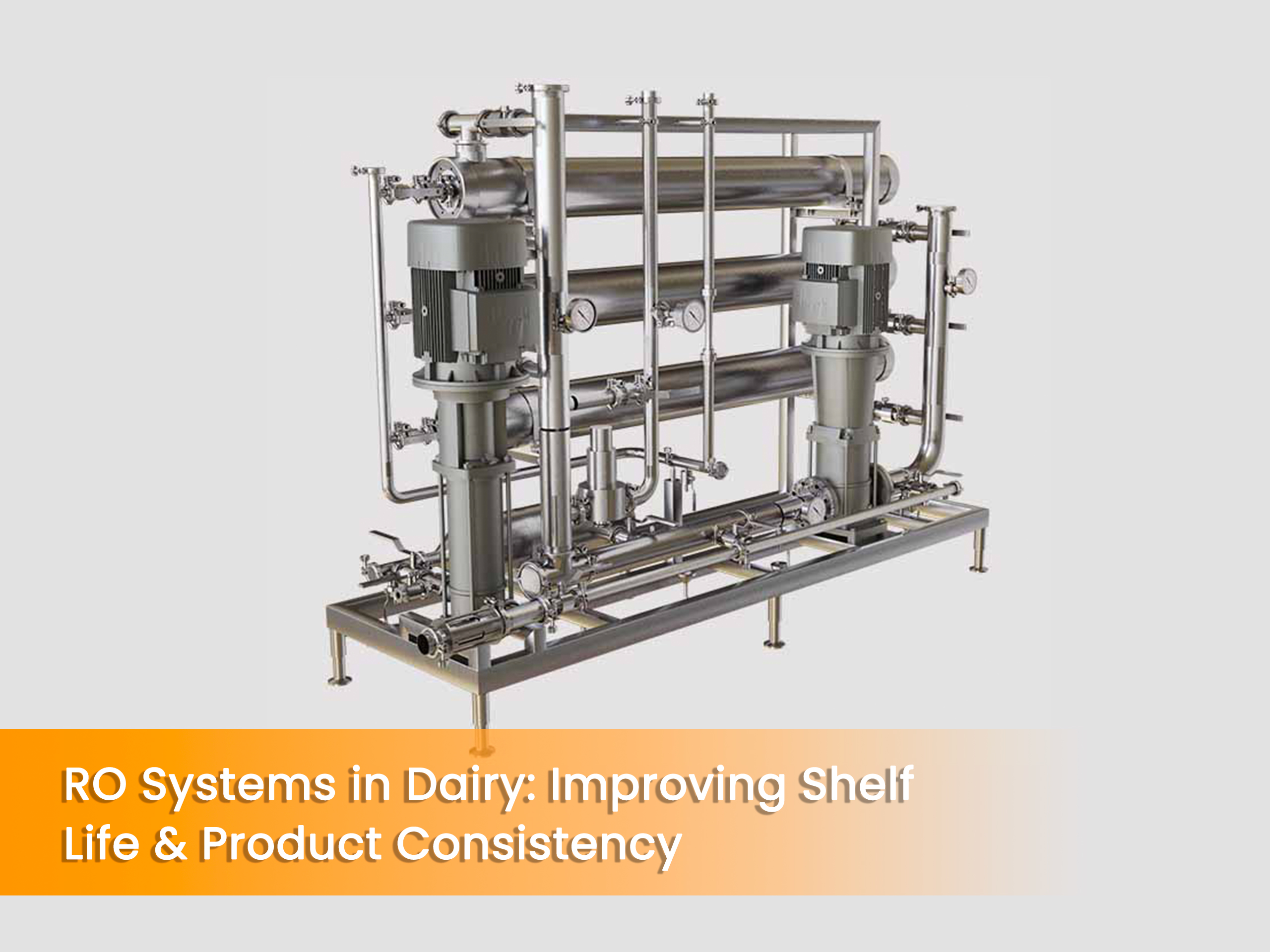
Up to 99% of dissolved salts, minerals, germs, and pollutants can be eliminated from dairy streams using reverse osmosis, a pressure-driven filtration method. Semi-permeable membranes that only permit water molecules to go through while obstructing undesirable chemicals are used in dairy RO systems.
In the dairy business, membrane filtering functions differently from conventional techniques. The RO system creates ultra-pure permeate, which is necessary for dairy processing, by forcing dairy fluids through specialised membranes at high pressure. Milk solids are concentrated, whey proteins are recovered, processing streams are purified, and product volume is decreased prior to additional processing using this membrane filtration method.
Reverse osmosis works at room temperature as opposed to thermal techniques, which employ heat. By doing this, nutritional value is maintained and protein denaturation, which lowers product quality, is avoided.
Key Advantages of RO in Dairy Operations
Product Quality and Consistency
Pure permeate from a commercial reverse osmosis system guarantees that the flavour and texture of milk products remain constant. Untreated dairy streams may contain dissolved minerals that alter product qualities and produce off-flavours. By removing these factors, RO processing gives processors more control over the quality of the finished product.
Additionally, the technique stops equipment from scaling. The technology also prevents scaling in equipment. RO takes calcium and magnesium out of dairy streams so that minerals don’t build up in pasteurisers, chillers, and heaters. This makes equipment last longer and cuts down on repair downtime.
Extended Shelf Life
A persistent risk in dairy processing is bacterial contamination. In the dairy business, RO filtration eliminates organic pollutants and bacteria that hasten spoiling. Dairy products that have been purified have a 20–30% longer shelf life without sacrificing flavour or safety.
Streamlining Operations
When dairy membrane filtering is used instead of conventional evaporation techniques, energy consumption is reduced by 50–60%. Boiling requires far more energy than using RO to concentrate milk or whey. By lowering product volume before shipping, the procedure also lowers transportation expenses.
Process stream recycling through RO cuts freshwater dependency by up to 70%. Dairy facilities can reuse treated streams for secondary purposes like cleaning, cooling, or boiler feed, supporting sustainable operations.
Performance Metrics of Established RO Systems in a Dairy Plant
The RO systems designed by Sanitech Engineers, combining UF and NF membranes, provide tangible improvements in the efficiency of dairy processing. For the production of Whey Protein Concentrate (WPC), these offer 70-to-90% demineralization (D 70/D 90 levels) and a concentration of proteins 50 to 80 g/L, increasing yields by 20% over normal procedures.
The consumption of energy reduces substantially with RO preconcentration, as it reduces steam consumption by 3-5% for every 1% increase in total solids over evaporation, with net reductions of 30-50% for milk/whey plantside streams for heat energy. The water recycling rate increases to 90% in process streams.
Application | Key Metric | Benefit |
Whey Demineralization | 70-90% mineral removal | Higher D90 powder value |
Milk Concentration | 18-25% TS from 9-10% | 50% volume reduction |
Lactose Recovery | 60-70% from mother liquor | Cuts 35-40% losses |
What Reverse Osmosis Systems Do in Dairy Processing
There are several uses for milk membrane filtering in dairy facilities:
- Milk concentration: Preserves nutritional value while reducing volume before cheese or powder manufacturing.
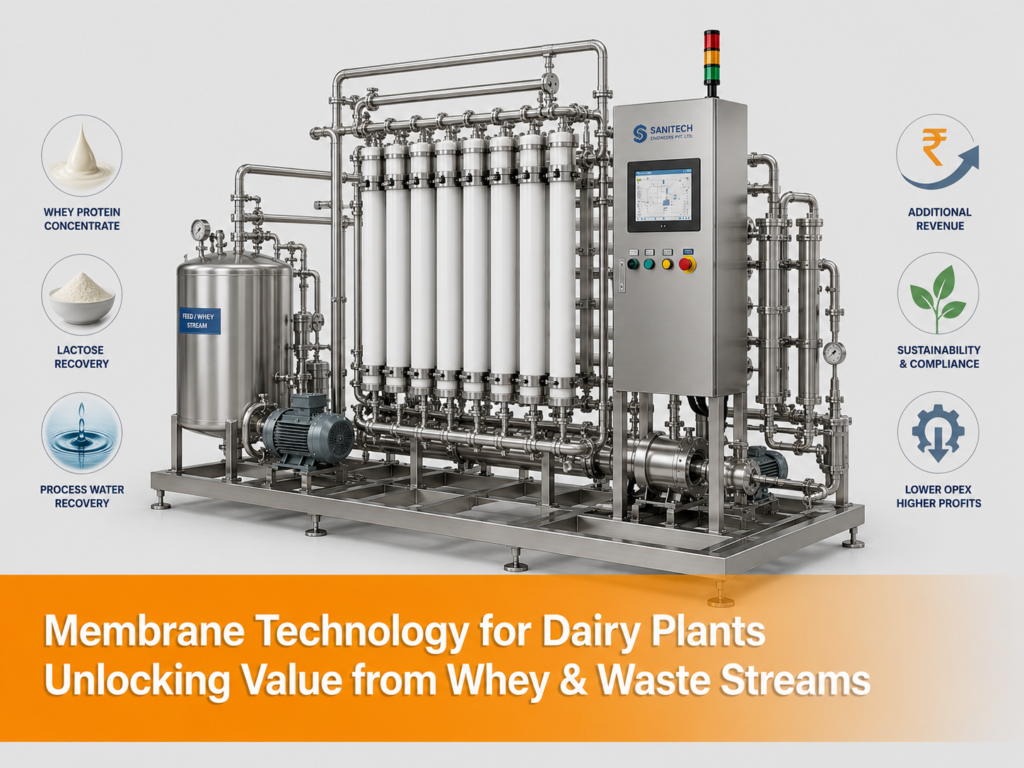
- Whey Processing: Whey processing recovers proteins and reduces waste disposal costs.
- Product dilution: Uses regulated permeate quality to produce a uniform taste in drinks, such as flavoured milk.
- Process stream treatment: Guarantees environmental compliance while recycling dairy streams
The adaptability of a reverse osmosis system company’s products enables dairy processors to tailor solutions according to certain production requirements.
Selecting the Right Commercial RO Partner
Selecting a membrane filtering supplier for the dairy business requires careful consideration. Seek out vendors who have demonstrated dairy expertise and are aware of the particular challenges involved in processing milk. Lactose, protein, and fat must be handled by the system without causing undue fouling.
Just as important as equipment quality is technical support. Your business partner for the reverse osmosis system should offer maintenance procedures, operator training, and installation advice. With specialised RO systems made for food processing settings, Sanitech Engineers specialises in dairy applications.
Challenges in Implementing RO in Dairy
Membrane fouling is still the biggest problem in the field. Minerals, proteins, and fats from milk build up on the membranes, making them less effective. Cleaning-in-place (CIP) processes that use enzymes and detergents regularly help keep performance high.
The key to success is matching system capacity to actual production needs and working with experienced suppliers who understand dairy-specific requirements.
Where Dairy Membrane Filtration Is Heading
Innovation continues to advance RO technology. New membrane materials offer better fouling resistance and higher flux rates. As automation gets better, systems get easier to use with less skilled work.
As rules about the environment get tighter, more dairy processors are switching to membrane technology. This sets up facilities to be compliant in the future and builds trust with customers by giving them consistent, high-quality milk and milk products.
Conclusion
Purification quality affects product consistency, equipment longevity, and operational costs. Every day without optimised dairy filtration means missed opportunities for quality improvement and cost savings.
Dairy membrane filtration is a necessary piece of infrastructure for competitive dairy processing, not only an improvement. Consumers today demand reliable, safe products. Environmental responsibility is required by regulators. Technology that provides both is essential for your organisation.
Are you prepared to revolutionise your dairy processing? Examine how cutting-edge RO systems can improve your output while saving money on operating expenses.
FAQs
Yes, RO significantly reduces energy consumption compared to traditional evaporation methods, lowers operational costs through stream recycling, and extends equipment lifespan by preventing mineral scaling and fouling.
Optimal performance is ensured by routine cleaning-in-place (CIP) operations using recommended chemicals, membrane replacement every six to fifteen months, and flux rate monitoring.
Of course. RO systems provide affordable solutions regardless of production volume, scaling from small batch operations to big industrial facilities.