
- Home
- Membrane Systems
- Caustic Recovery System
Membrane Systems
Caustic Recovery System
Sanitech Engineers is one of the Top and Reliable caustic recovery systems manufacturers and providers meeting international regulatory standards.
CIP is very crucial in any process for which chemical cleaning is the method of choice. A Clean in place System ensures thorough internal cleaning without dismantling the equipment. Caustic is majorly used in CIP as it is cheap and easily available. The CIP cleaning solutions land up in high volumes, which adds to the load on the ETP process. Caustic soda recovery offers a 3-fold advantage:
- Saving caustic and water
- Saving acid, as caustic or high pH water cannot be sent to ETP directly. Thus, it needs to be neutralised, which generates salt
- Salts need to be removed before sending to ETP
Thus, a suitable caustic recovery system that can withstand high pH conditions can help in cost-effective caustic soda recovery and recycling, reducing waste generation, lowering operating costs, and promoting sustainable practices across various industrial processes including dairy, pharmaceuticals, biopharmaceuticals, petrochemicals, pulp and paper, textiles, and metal processing.
The CIP system or spent caustic usually contains impurities and contaminants, which are removed using a specialized membrane capable of withstanding pH up to 14.0.
A well-designed caustic recovery plant can integrate seamlessly into any cip system to improve efficiency and reduce environmental load.
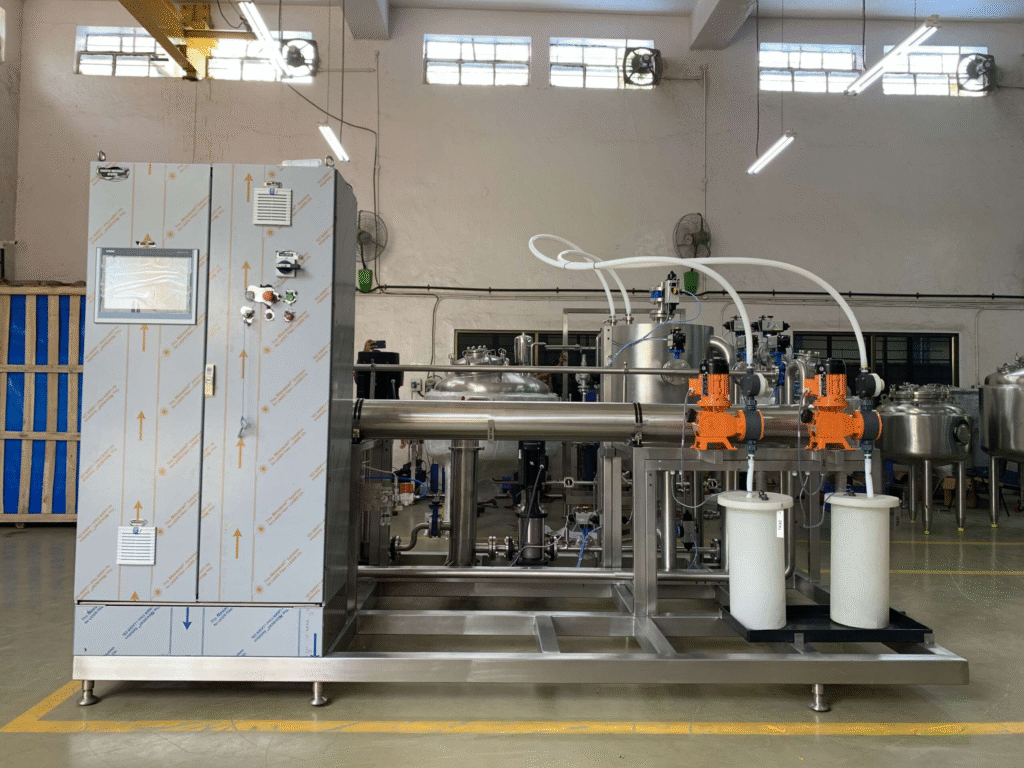
Understanding Caustic Recovery: Working Principle and Types
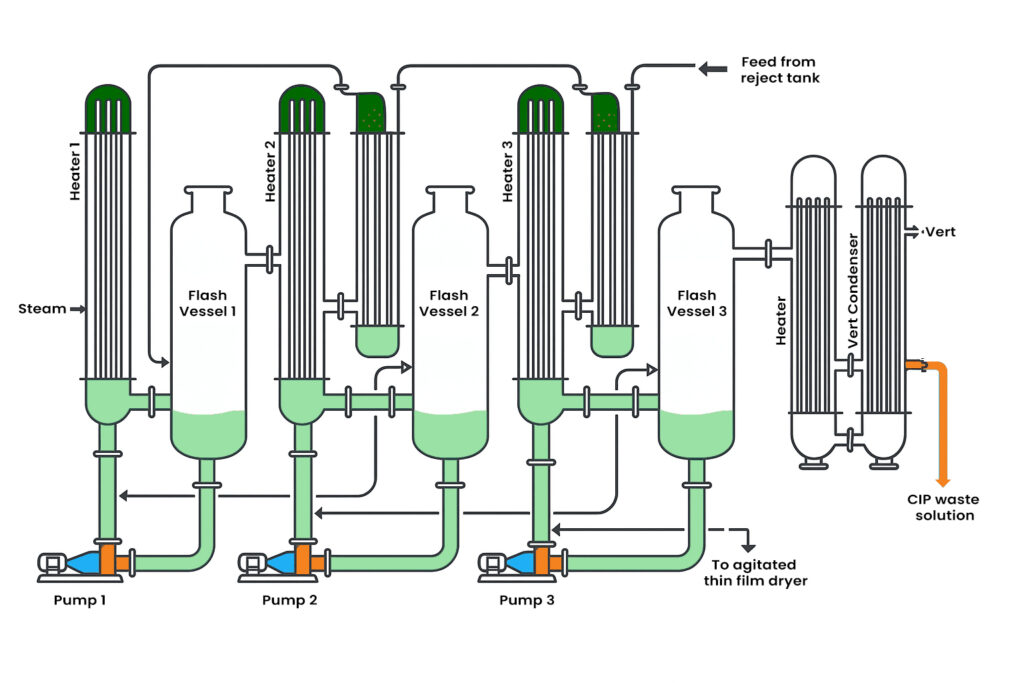
Reverse Osmosis (RO) is a high-pressure membrane separation process that removes dissolved salts, organic molecules, and impurities at the ionic level. RO membranes have a pore size of ~0.1–1 nm and a MWCO below 200 Daltons.
Working Principle of Reverse Osmosis System
High pressure forces liquid through semi-permeable membranes (~0.1–1 nm), removing dissolved salts and impurities.
- Feed Solution Entry – High pressure is applied to push the liquid against the RO membrane.
- Membrane Separation – The semi-permeable membrane blocks salts and dissolved solids while allowing only solvent molecules to pass.
- Retentate & Permeate – Retentate is the concentrated brine/reject, permeate is the purified solvent.
- Operating Pressure – Works typically at 10–80 bar depending on feed concentration.
What are the different Classifications of Caustic Recovery Systems ?
1. Based on Membrane Type
- UF and NF membranes rated for pH tolerance up to 14, in ceramic or specialized polymeric materials resistant to caustic degradation.
2. Based on Design
- Tubular and spiral-wound configurations suited to high-fouling CIP waste streams.
3. Based on Recovery Target
- Contaminant removal (fats, proteins, sugars) vs. caustic concentration for reuse.
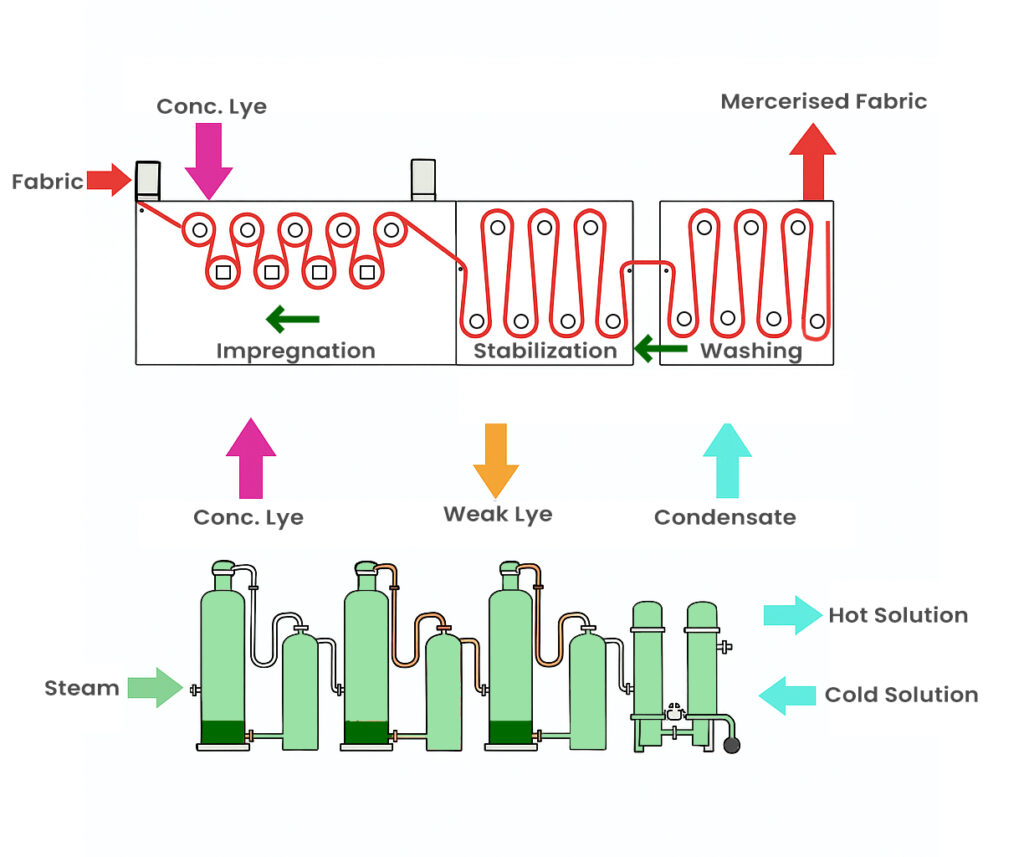
Advantages of Caustic Recovery System:
- Energy-efficient processing technology
- Minimal operating and maintenance costs
- Versatile systems adaptable to various product applications
- Built-in SIP/CIP capabilities for comprehensive cleaning
- Sanitary system design for hygienic applications
- Zero effluent discharge for environmental compliance
- Compact, skid-mounted systems with minimal footprint
- Superior CapEx and OpEx compared to traditional separation methods
- Multiple membrane options across MF, UF, NF, and RO technologies with various materials of construction and module designs for specific process requirements
Applications of Caustic Recovery System
- Caustic recovery CIP waste solution for efficient recycling and reduced environmental load
- Suitable for dairy, food & beverages, and textile industries
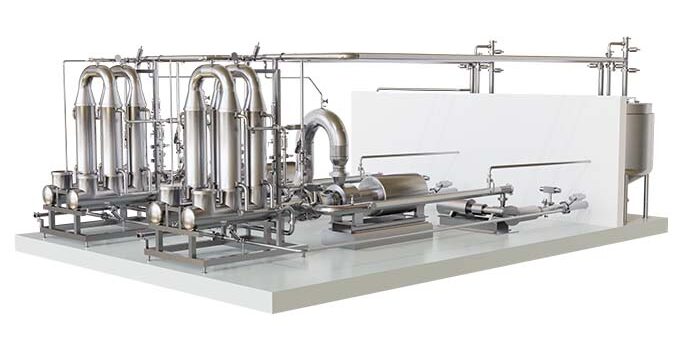
FAQs
A caustic recovery system (CRS) is an industrial setup designed to reclaim and reuse spent caustic soda (NaOH) solutions that are used in cleaning, textile mercerization, or other process applications. Instead of discarding the caustic after it becomes diluted or contaminated, the CRS concentrates and purifies it through membrane filtration, evaporation, or other separation technologies, allowing industries to cut chemical costs, reduce wastewater load, and improve sustainability.
The caustic recovery process reclaims used caustic soda (NaOH) from industrial operations by filtering out impurities and concentrating the solution through membrane filtration or evaporation. The purified caustic is then reused in processes like textile mercerization, pharmaceutical cleaning, or food production. This reduces chemical costs, minimizes wastewater, and supports sustainable manufacturing.
The full form of CRP plant is Caustic Recovery Plant.
It is used to recover and recycle caustic soda (NaOH) from industrial processes, mainly in textiles, pharmaceuticals, and food industries, to reduce chemical consumption and environmental impact.