
Cosmetics & Ayurveda
Supercritical CO₂ Extraction Systems for Cosmetics & Ayurveda
Sanitech Engineers, with SFE Process, provides Supercritical CO₂ extraction solutions for cosmetics and Ayurvedic applications. This technology supports essential oils, curcumin, oleoresins, and other natural bioactive extracts.
Supercritical CO₂ offers controlled extraction while reducing reliance on conventional organic solvents. It also helps protect delicate compounds and allows precise control over extraction conditions.
Our solutions support R&D, process development, and industrial-scale extraction. We configure each system around the raw material, target compound, and required extract profile.
Introduction
Advanced Botanical Extraction for Natural Cosmetic & Ayurvedic Ingredients
Cosmetic and Ayurvedic products often use botanical oils, oleoresins, fragrances, and plant-based active ingredients. Their extraction depends on temperature, raw material, target compounds, and the required extract.
Supercritical CO₂ uses controlled temperature and pressure to extract selected compounds from plant materials. The process can protect temperature-sensitive compounds while allowing better control over the final extract.
Sanitech Engineers, with SFE Process, provides laboratory, pilot, and industrial-scale extraction systems for suitable botanical applications.
DID YOU KNOW?
With supercritical CO₂ (scCO2), we can also produce natural active ingredients without using ethanol, which means we can offer our equipment to industries wishing to make Halal products or offer ingredients without traces of alcohol. Supercritical CO₂ extraction is revolutionizing the way natural ingredients are harnessed for cosmetics and Ayurveda. This clean, solvent-free technology preserves the purity and potency of delicate bioactive compounds, making it ideal for creating high- performance, natural products. For example, scCO2 is used to extract essential oils from lavender and rosemary for soothing and rejuvenating skincare, and to isolate curcumin from turmeric for its powerful anti-inflammatory properties in Ayurvedic therapies. With its precision and sustainability, scCO2 enables the creation of products that align with modern wellness trends while honoring nature’s gifts.
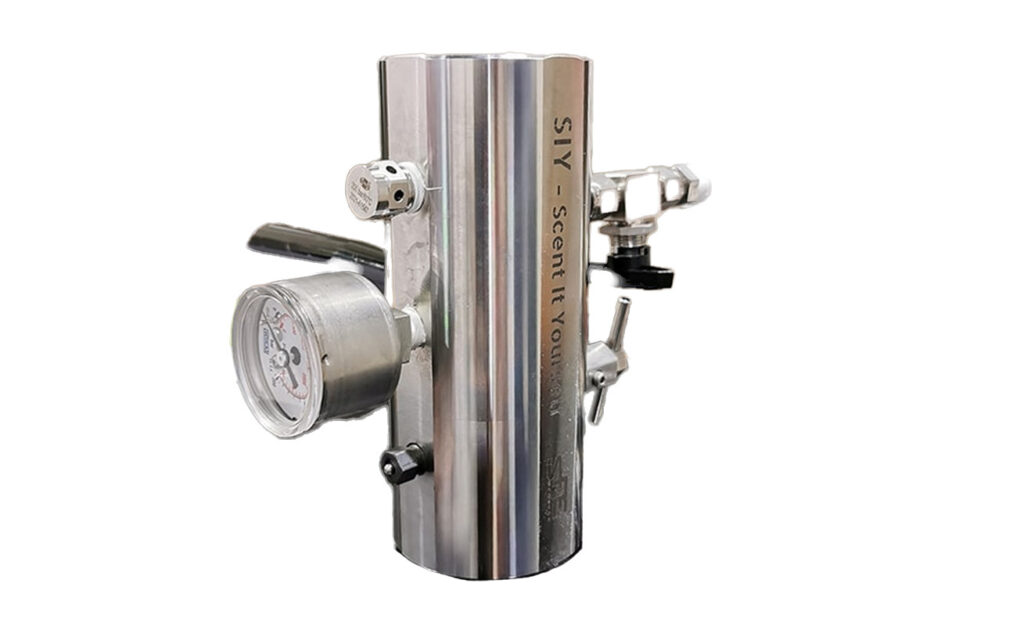
SIY
Nomadic Solutions
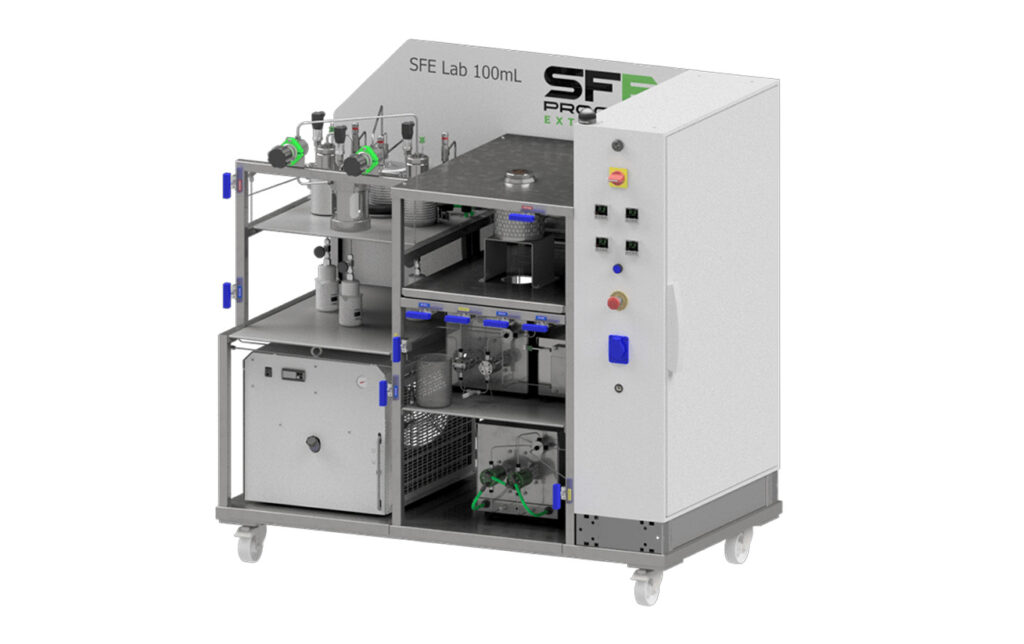
R&D
Lab Solutions
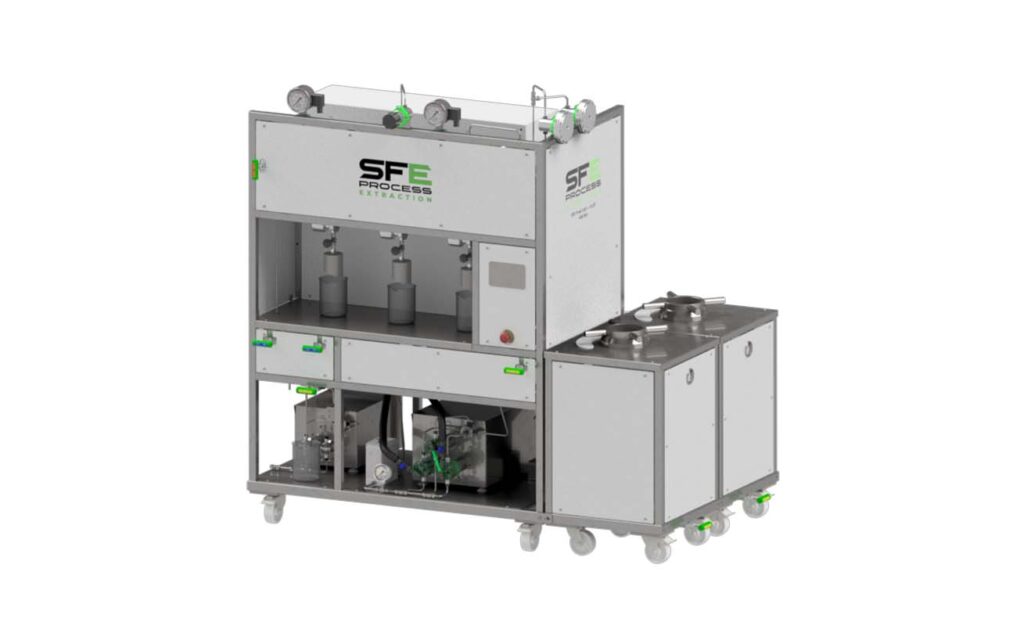
Industrial Production
Scale Solutions

Coffe Flavour Extraction

Cocoa Butter Extraction
Curcumin Extraction

Extraction of Flower Essences

Vanilla Oleoresin Extraction
How Supercritical CO₂ Extraction Works
The extraction process places prepared botanical material inside an extraction vessel. Carbon dioxide is pressurized and heated above its critical point, creating a supercritical fluid. The supercritical CO₂ passes through the raw material and dissolves selected extractable compounds.
The CO₂ and dissolved compounds then move to one or more separation stages. By changing pressure and temperature, selected compounds can be separated from the CO₂ stream and collected. The process conditions can be adjusted according to the raw material and target extract.
Typical process sequence:
Raw Material Preparation → CO₂ Pressurization → Supercritical Extraction → Separation → Extract Collection → CO₂ Recovery / Recirculation
Why Supercritical CO₂ for Cosmetics & Ayurveda?
For suitable botanical ingredients, Supercritical CO₂ extraction offers several process advantages compared with conventional extraction routes.
- Operates at relatively moderate temperatures, which can be useful for heat-sensitive compounds.
- CO₂ can be separated from the extracted product by reducing pressure.
- Can reduce reliance on conventional organic solvents for suitable applications.
- Pressure and temperature can be adjusted to influence extraction selectivity.
- Can be used for selected volatile oils, lipophilic compounds, oleoresins and botanical actives.
- Supports controlled process development from laboratory trials to larger-scale production.
- Can be used for selected volatile oils, lipophilic compounds, oleoresins and botanical actives.
Cosmetic & Ayurvedic Extraction Applications
Botanical & Natural Ingredient Applications:
Essential Oil Extraction
Supercritical CO₂ can be used to recover suitable volatile and lipophilic compounds from aromatic botanical materials. Potential applications include selected herbs, flowers and spices used in cosmetic and personal-care formulations.
Curcumin & Turmeric Extract Processing
Turmeric contains curcuminoids and other extractable components used across Ayurveda, nutraceutical and cosmetic applications. Supercritical fluid processing can be evaluated according to the desired turmeric fraction and process objective.
Oleoresin Extraction
Oleoresins contain concentrated flavour, aroma and other lipophilic compounds from botanical raw materials. Supercritical CO₂ can be evaluated for selected spice and plant oleoresin applications.
Flower & Botanical Extracts
Flower materials and aromatic botanicals can contain volatile and sensitive compounds used in fragrances, skincare and personal-care products. Extraction conditions can be adjusted according to the target fraction.
Natural Oils & Lipid-Soluble Actives
Supercritical CO₂ is particularly relevant to suitable non-polar and lipophilic compounds, including selected plant oils and lipid-soluble active fractions.
Fragrance & Aroma Ingredients
Controlled extraction can support recovery of selected aroma compounds from suitable botanical materials for fragrance and personal-care applications.
What Can Be Controlled in Supercritical CO₂ Extraction?
Supercritical CO₂ extraction is not a single fixed process. Extraction performance and selectivity depend on the operating conditions and raw material.
- Extraction pressure
- Extraction temperature
- CO₂ flow rate
- Raw-material particle size and preparation
- Extraction time
- Separator pressure and temperature
- Number of separation stages
- Use of a modifier / co-solvent where the process requires it
- Target compound and desired extract profile
- Batch size and scale
Process-development trials help determine a suitable operating window before scale-up.
R&D, Pilot & Industrial Supercritical CO₂ Systems
Botanical extraction processes often need testing before commercial equipment is finalized. Raw-material variability, target compounds, extraction conditions and desired yield can all influence the final system configuration.
Sanitech Engineers and SFE Process support solutions across development and production scales.
Scale | Primary Purpose | Typical Use |
| R&D / Laboratory | Feasibility and parameter development | Raw-material screening, extraction trials, parameter optimization |
| Pilot / Scale-Up | Generate scale-up data | Process optimization, repeatability studies, production planning |
| Industrial Production | Commercial extraction | Routine production at the required processing capacity |
Process Evaluation → Lab Trials → Parameter Optimization → Pilot / Scale-Up → System Engineering → Industrial Production
Supercritical CO₂ vs Conventional Solvent Extraction
Factor |
Supercritical CO₂ |
Conventional Solvent Extraction |
| Extraction medium | Pressurized CO₂ | Organic or aqueous solvent depending on process |
| Operating temperature | Can operate at relatively moderate temperatures | Varies by solvent and extraction method |
| Solvent removal | CO₂ separates as pressure is reduced | May require downstream solvent-removal operations |
| Selectivity | Can be adjusted through pressure and temperature | Controlled through solvent choice, composition and process conditions |
| Best suited to | Many suitable volatile and lipophilic compounds | Broad range depending on solvent system |
| Process development | Requires optimization of pressure, temperature and separation | Requires optimization of solvent, temperature, time and downstream recovery |
Extraction Solutions for Different Product Goals
- Essential oils for skincare and personal-care formulations
- Botanical active fractions
- Turmeric / curcuminoid processing
- Oleoresins from suitable spices and botanicals
- Natural aroma and fragrance fractions
- Plant oils and lipid-soluble compounds
- Application-specific Ayurvedic botanical extracts
- R&D extraction and formulation-support trials
Customized Extraction System Design
Supercritical CO₂ systems should be configured around the botanical material, target extract and production requirement.
- Raw material and moisture content
- Target compounds
- Required extraction selectivity
- Extraction pressure and temperature
- CO₂ flow and circulation
- Extractor vessel capacity
- Separator configuration
- Batch size and production throughput
- Automation and process control
- CO₂ recovery and recirculation
- Use of co-solvent / modifier where required
- Laboratory, pilot or industrial scale
Why Sanitech Engineers?
Supercritical CO₂ Technology Access
Solutions provided in collaboration with SFE Process for laboratory and industrial extraction requirements.
R&D to Production Scale
Support for feasibility, process development, optimization and scale-up.
Application-Specific Engineering
Equipment and process parameters are selected around the botanical material and target extract.
Broader Separation Expertise
Sanitech's membrane filtration and chromatography capabilities can support suitable downstream purification requirements.
Engineering & Project Support
Capabilities can include process development, detailed engineering, automation, fabrication, installation and commissioning.
Customized Solutions
System configuration can be adapted to vessel size, extraction conditions, separator requirements, automation and production capacity.
FAQs
Supercritical CO₂ extraction uses carbon dioxide above its critical temperature and pressure as an extraction medium. Under these conditions, CO₂ can penetrate raw material and dissolve selected compounds. The extract is separated from the CO₂ by changing pressure and temperature.
It can be useful for extracting suitable volatile, lipophilic and temperature-sensitive botanical compounds used in cosmetic and personal-care formulations. Extraction conditions can be adjusted according to the raw material and desired extract profile.
Supercritical CO₂ can be evaluated for selected Ayurvedic botanicals where the target compounds have suitable solubility in supercritical CO₂. Applications may include oils, oleoresins and other plant-derived active fractions.
Yes, it can be used for suitable aromatic botanicals to recover selected volatile and lipophilic compounds. The operating conditions depend on the plant material and the desired essential-oil or aroma profile.
Supercritical fluid processing can be evaluated for turmeric and curcuminoid-related applications. The process conditions and, where required, use of a modifier depend on the target compounds and desired extract composition.
CO₂ acts as the extraction solvent in the process, so 'solvent-free' can be misleading. A more accurate description is that Supercritical CO₂ can reduce or avoid the use of conventional organic solvents in suitable applications. Some processes may also use a co-solvent or modifier.
When pressure is reduced, CO₂ returns to a gaseous state and separates from the collected extract. Final product specifications still depend on the complete process and any other materials used.
CO₂ becomes supercritical above approximately 31°C and 73.8 bar. Actual extraction temperature and pressure are selected according to the raw material, target compounds and required selectivity.
Supercritical CO₂ is particularly useful for many non-polar and lipophilic compounds, including selected oils, aroma compounds and oleoresins. More polar compounds may require different conditions or a suitable modifier.
Important factors include pressure, temperature, CO₂ flow rate, extraction time, particle size, raw-material moisture, separator conditions and the chemistry of the target compounds.
Yes. Pressure, temperature, flow, extraction time and separator conditions can be adjusted according to the botanical material and target extract. Laboratory trials are useful for establishing suitable process conditions.
Supercritical CO₂ uses pressurized carbon dioxide as the extraction medium, while conventional methods may use organic or aqueous solvents. Each method has different selectivity, operating conditions and downstream solvent-removal requirements.
Sanitech Engineers, in collaboration with SFE Process, provides solutions for R&D and laboratory-scale extraction as well as larger production requirements.
Yes. Laboratory and pilot trials can generate data for process optimization and scale-up. Final industrial design should account for raw material, extraction parameters, batch size, separator configuration, throughput and process control.
For suitable extract streams, membrane filtration or chromatography may support downstream clarification, concentration or purification. The appropriate technology depends on the solvent system, target compound and required separation.

Trusted by over 100 companies around the globe
We consistently receive recurring business from our loyal customers who seek customised solutions.