Modern labs have a problem that never goes away: how to clean up vast amounts of compounds without losing quality or speed. It can be hard for traditional preparative HPLC systems to find this balance, which leads to uneven results and the need to replace columns repeatedly. The answer is to learn how managing pressure changes the efficiency of separation.
The Growing Need for High-Performance HPLC and DAC Technology
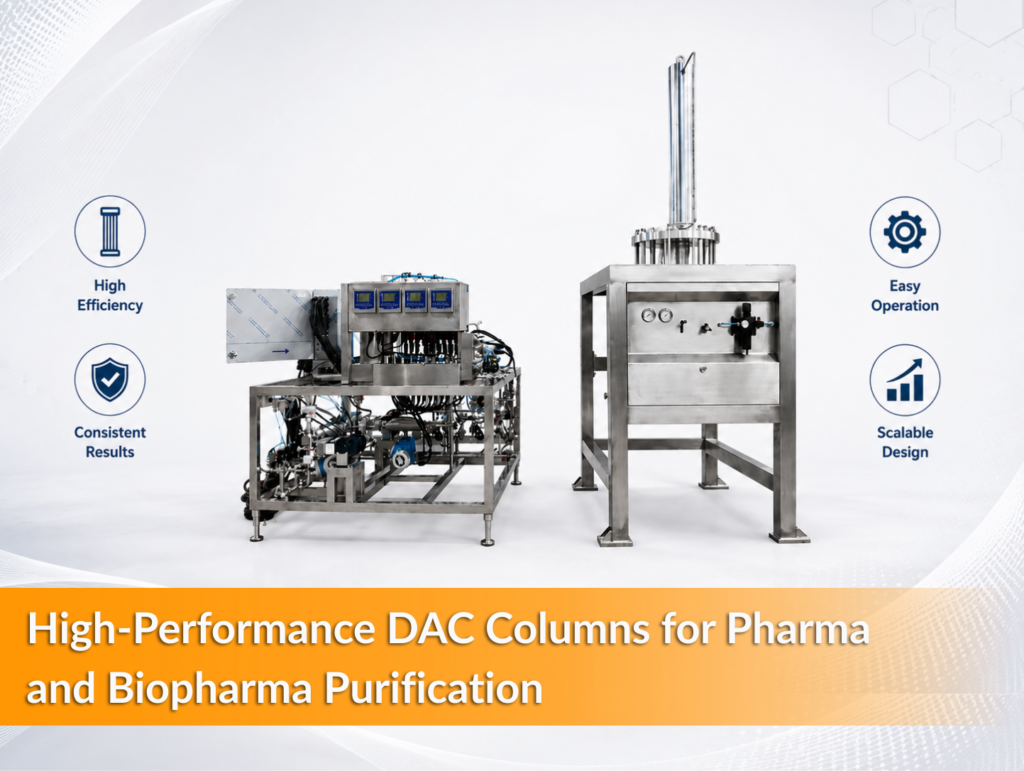
As the needs for analytical and preparative chromatography grow, labs need strong ways to purify huge amounts of compounds. Preparative HPLC columns need to be able to handle large amounts of samples while keeping the separation quality high. Dynamic axial compression columns use specific packing technology to ensure that they are stable even when there are high operational pressures. This makes them crucial for preparative HPLC applications where sample load capacity and reliable performance are very important.
Peptides once considered as niche are rapidly expanding class of therapeutics having inherent biological advantages, coupled with continuous technological breakthroughs in synthesis, purification, and delivery. This upcoming market will require advanced and efficient peptide processing solutions, an area where companies like Sanitech Engineers play a pivotal role.
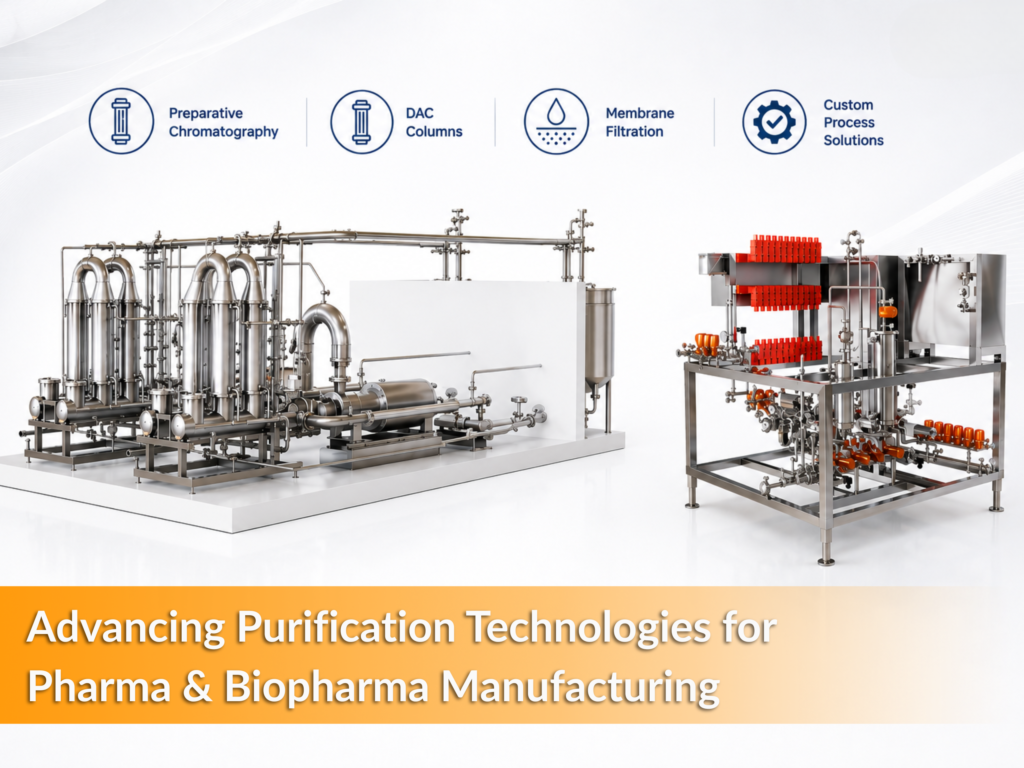
In the area of therapeutics to diagnostics, peptide synthesis and purification are critical steps in the development full of challenges. This blog explores common hurdles encountered in peptide processing and presents comprehensive solutions offered by advanced separation and purification systems, specifically focusing on membrane filtration and preparative chromatography technologies, highlighting how Sanitech Engineers can be your trusted partner in overcoming these hurdles.
Why Pressure Matters in HPLC
Pressure management is a very important factor for HPLC to work well and give correct results. The link between pressure and column efficiency has a direct effect on peak resolution and the time it takes to analyse. High-pressure pumps are needed to push the mobile phase through tiny particles packed within the chromatographic column.
The quality of separation goes down when the pressure drops or changes. Not enough pressure generates large peaks and bad separation, while too much pressure might break columns or shorten their lives. High-pressure DAC columns fix this by keeping the compression steady throughout the separation process.
What Are DAC Columns?
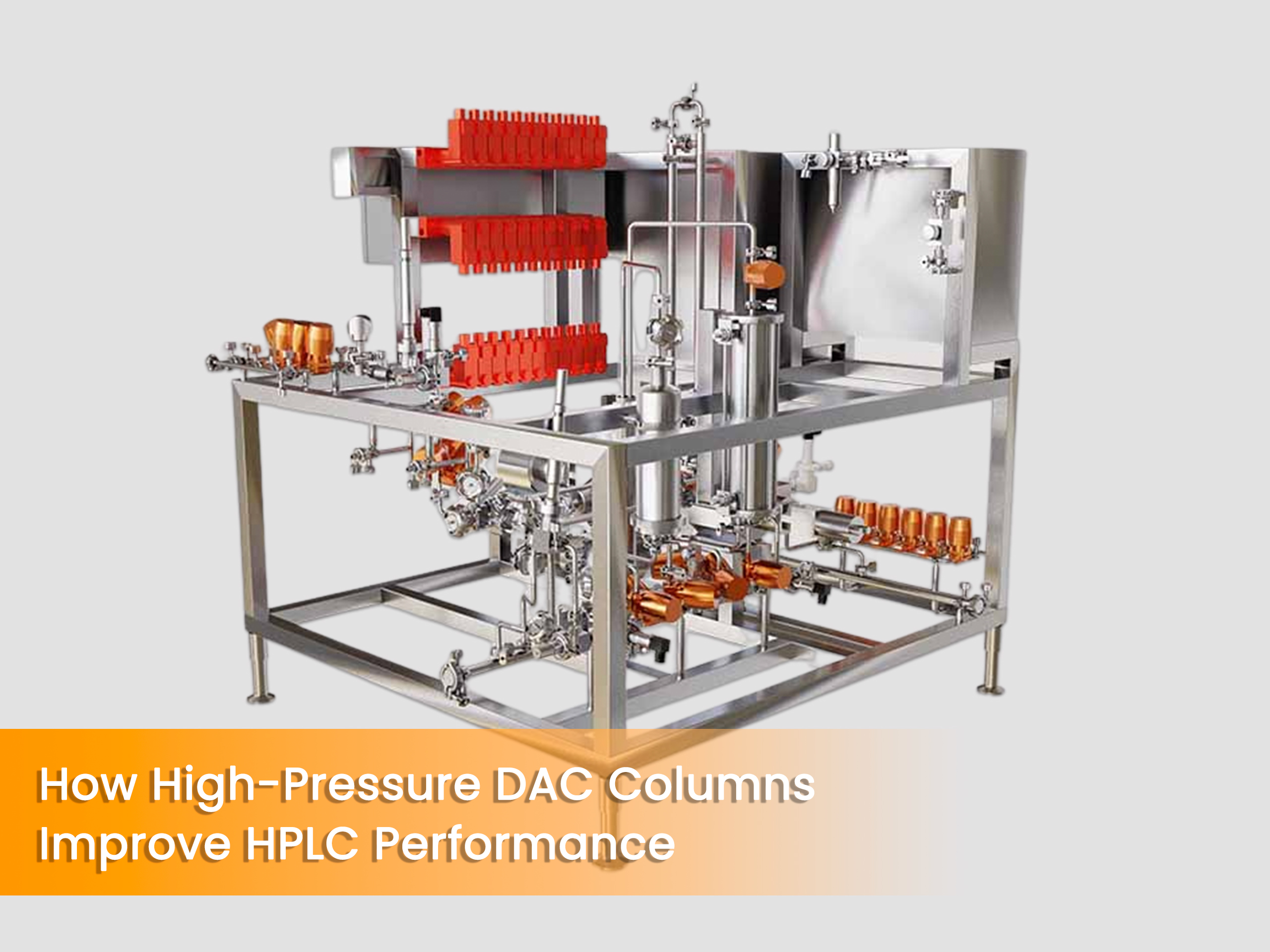
DAC columns in HPLC have a piston mechanism that may be adjusted to apply even axial pressure on the packed bed. These preparative HPLC DAC columns are different from fixed columns because they compensate for bed settling and maintain the best packing density. This dynamic adjustment makes sure that performance stays stable even while processing a lot of samples or using different flow rates.
Key Benefits of High-Pressure DAC Columns
DAC technology takes HPLC column optimisation to a whole new level by:
- Improved Efficiency: Dynamic compression stops voids from forming and keeps particle distribution even, which makes the column more efficient. a lot
- Stability of Pressure: Automatic adjustment makes up for bed consolidation, which keeps the column pressure in HPLC processes steady.
- Longer Life: Less mechanical stress and even packing reduce the chances of particles breaking and columns breaking down.
- Reproducible Results: Having the same bed density every time ensures that separations work every time.
- Easier Repacking: With customisable compression devices, packing HPLC columns is easier.
Application Examples in Industrial HPLC
Medicinal businesses employ high-pressure DAC columns to clean active medicinal compounds on a large scale. Biotechnology companies use these systems to purify proteins, and it is very important to keep the bed stable during long runs. Chemical producers can separate complex mixes better and handle bigger sample quantities than regular columns can.
Conclusion
High-pressure DAC columns are a big step forward in preparative chromatography. Modern labs can’t live without them since they can keep the pressure steady, stop the bed from sinking, and give reliable findings. The combination of speed, stability, and convenience of use solves the main problems that preparative HPLC applications face.
Are you ready to improve your preparative HPLC skills? Look into Sanitech Engineers’ advanced DAC column solutions made for tough industrial uses.
FAQs
DAC columns use dynamic axial compression to keep the bed density at its best, but ordinary columns have fixed packing that can settle with time.
Yes, high-pressure DAC columns are made for preparative uses that need high pressures and large sample loads.
DAC columns give sharper peaks and greater resolution by stopping voids from forming and keeping the particles evenly spread out.
They are great for preparative HPLC, where you need to purify huge amounts of material and have constant performance in different situations.
To get the best performance, you should regularly check the compression settings and repack the HPLC column using the right packing techniques.