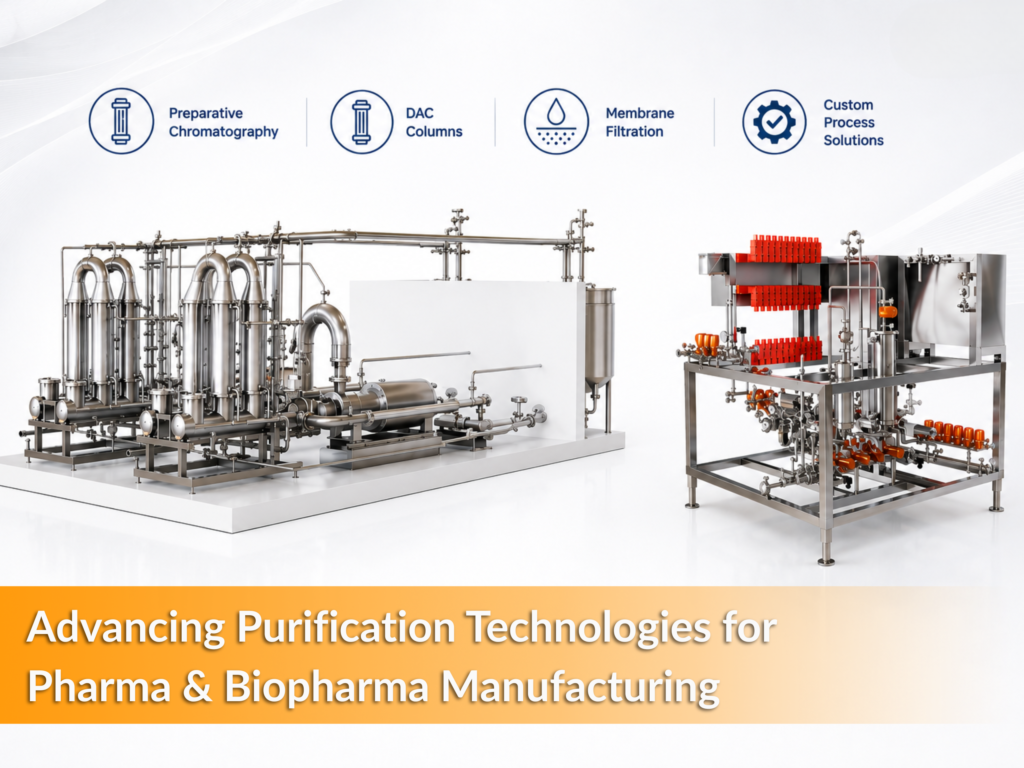
With the continued advancement in Pharmaceutical and Biopharmaceutical manufacturing, there remains a growing need for purification technologies that are efficient, scalable, and reliable. Whether the process involves APIs, peptides, proteins, monoclonal antibodies, vaccines, or other high-value biomolecules, achieving the required purity, recovery, and consistency is critical.
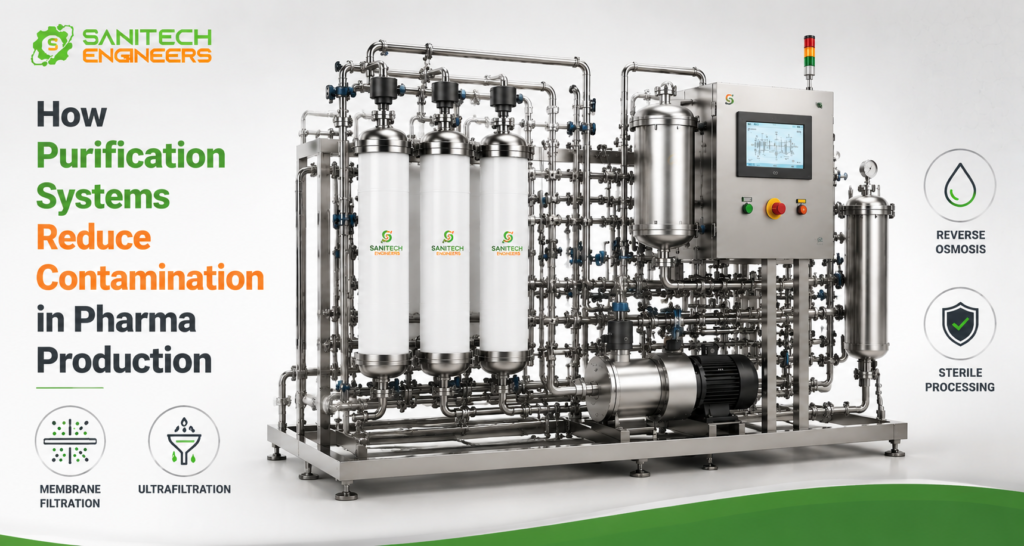
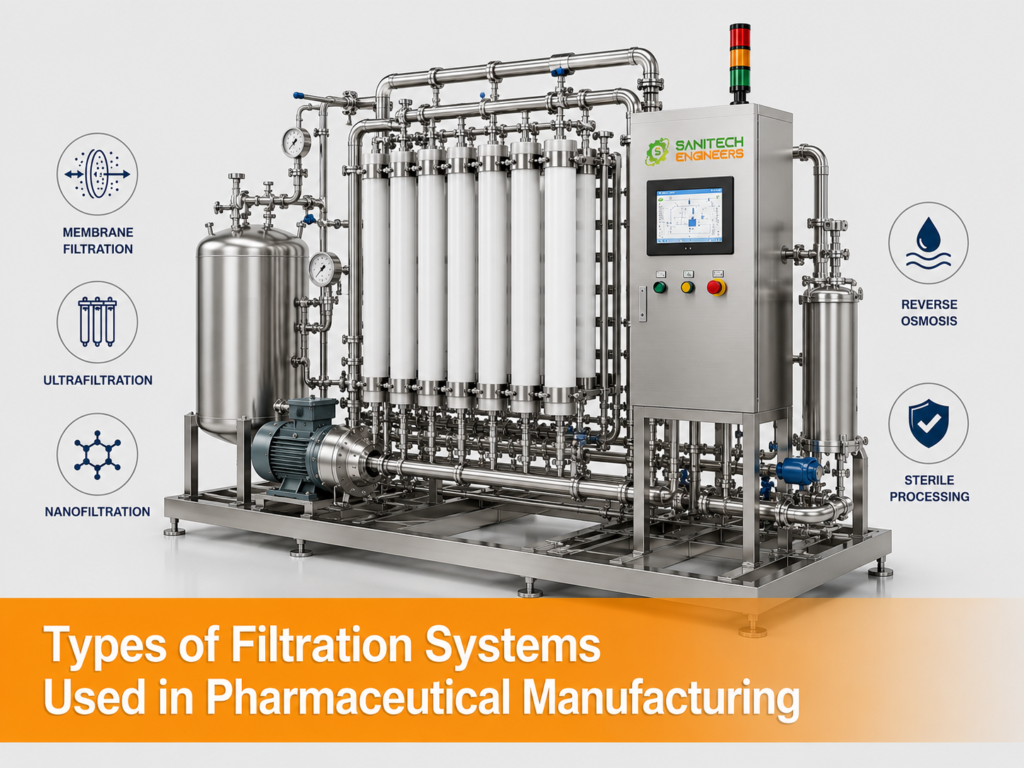
Purification is one of the major steps involved in pharmaceutical manufacturing. Purification technology is supposed to separate the product from its impurities as well as other ingredients in an efficient manner. In order to ensure efficient and reliable purification of increasingly complex products, purification technologies have to be scalable.
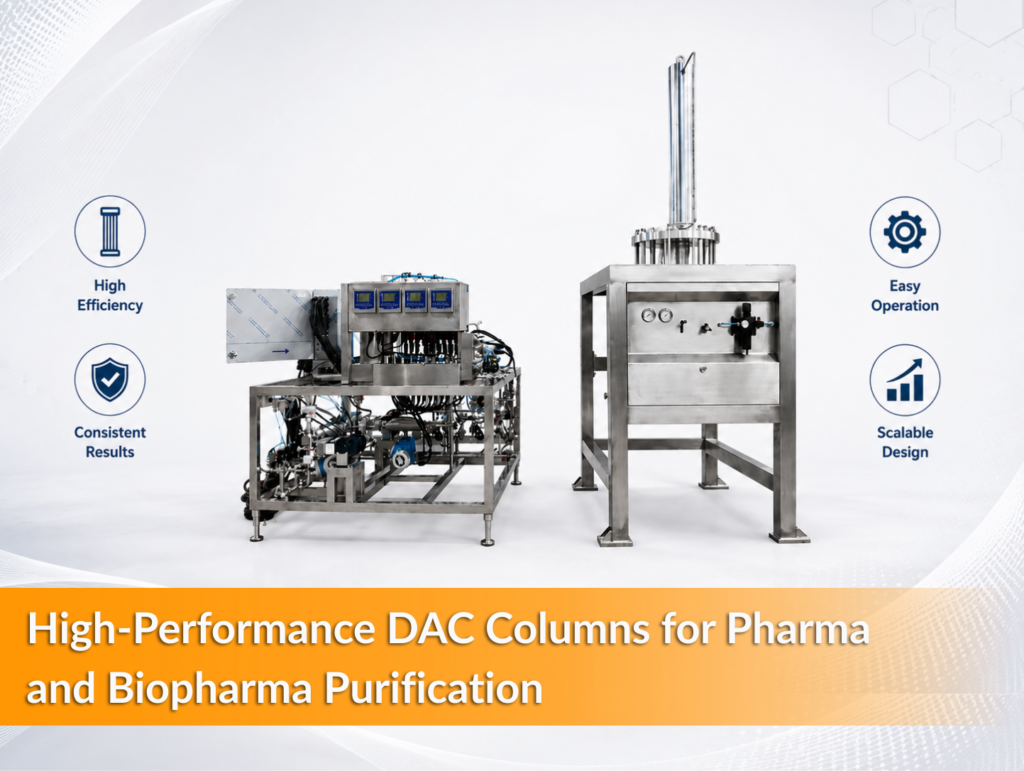
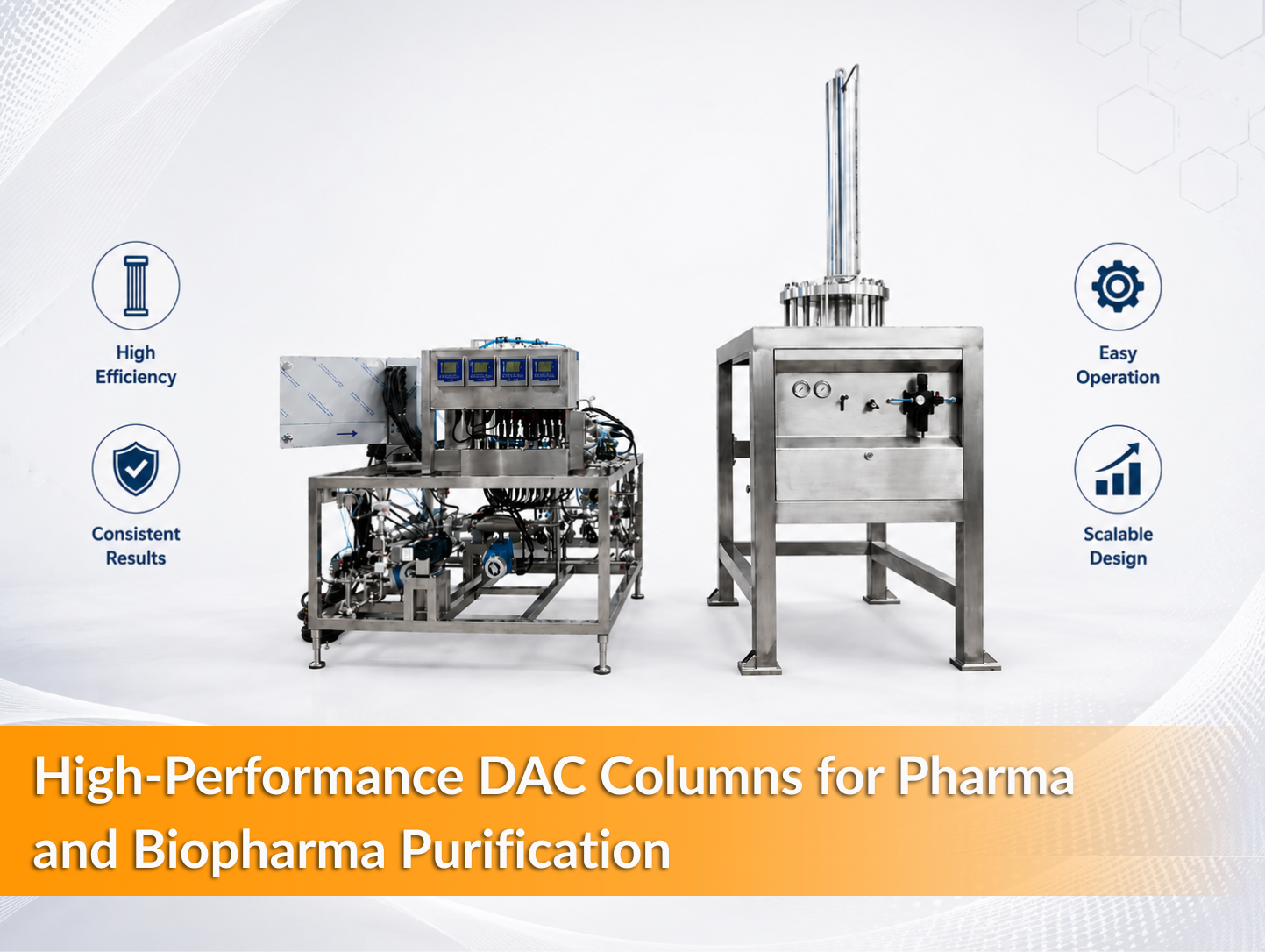
One such technology that is used for preparative purification is Dynamic Axial Compression (DAC) chromatography. DAC columns use controlled axial compression of the chromatography media to support effective packing, separation efficiency, batch consistency, and process scale-up.
Why DAC Columns Matter in Preparative Chromatography
Preparative chromatography is widely used for the isolation of Pharmaceutical and Biopharmaceutical products. The objective in preparative chromatography is to isolate the required molecule from a mixture at the required scale.
The way the chromatography media is packed inside the column is an important consideration. Non-uniform packing can affect the flow behavior of the mobile phase, which in turn can affect the separation efficiency of the process and lead to inconsistent results between runs.
This becomes even more important when scaling up the process from laboratory or pilot scale to large-scale production. In such cases, the column needs to maintain proper performance during scale-up.
DAC technology addresses the packing stage through dynamic axial compression. The chromatography media is compressed along the axis of the column, helping establish a controlled packed bed. The column bed length can also be adjusted according to process requirements.
How Dynamic Axial Compression Works
Dynamic Axial Compression (DAC) chromatography columns use controlled compression of the chromatography media during column packing. This allows achieving greater uniformity of packing as well as better control of the column setup.
Depending on the system and application, dynamically axial compressed columns may have:
- Controlled axial compression of the packing material
- Adjustable column bed length
- A thermostat jacket for temperature control
- Automated operation
- Configurations to handle different pressure requirements
- A design that supports process scale-up
The main goal is to maintain a controlled chromatography bed that delivers consistent separation and repeatable operation as the process moves from smaller to larger scales.
Applications of DAC Columns in Pharma & Biopharma
DAC columns can be used across a range of Pharmaceutical and Biopharmaceutical purification processes. The application depends on the molecule, chromatography media, operating conditions, and required pressure range.
Application | Typical Use |
API & highly potent API purification | Separation and purification of active pharmaceutical ingredients |
Peptide purification | Separation and purification of complex peptide mixtures |
Protein & enzyme purification | Preparative purification of proteins and enzymes |
Monoclonal antibodies & biologics | Purification of complex biopharmaceutical products |
Vaccines & nucleic acids | Preparative purification of vaccine and nucleic acid products |
Insulin & hormones | Separation and purification of therapeutic biomolecules |
Chiral compounds & stereoisomers | Separation of closely related molecular forms |
Lipids, natural extracts & plasma fractions | Isolation and purification of specific compounds and fractions |
The exact applications vary depending on the DAC configuration. High-pressure systems cover applications such as peptide separation and purification, highly potent APIs, chiral compounds and stereoisomers, insulin, hormones, lipids, and natural extracts. Medium- and low-pressure systems are also used for proteins, monoclonal antibodies, enzymes, nucleic acids, vaccines, and blood plasma fractions.
Why Choose DAC Columns for Purification?
The performance of a preparative chromatography column depends on how well the packed bed is prepared and how consistently the system operates.
Uniform Bed Compression: Controlled axial compression helps establish a uniform packed bed and supports consistent flow through the chromatography media.
Separation Efficiency: Effective packing is an important part of maintaining the required separation performance during the purification process.
Batch Consistency: Consistent column preparation and operation can help reduce process variability and support repeatable results from one batch to another.
Scalable Design: Purification processes may begin at laboratory or pilot scale and later move toward production. DAC columns can be configured for different process requirements and scales.
Robust Construction: Column construction needs to match the operating conditions of the process, particularly for applications involving higher pressures.
Easy Operation & Maintenance: Automation and appropriate system configuration can simplify column operation, monitoring, and routine handling.
Together, these factors can support efficient purification, product recovery, and consistent downstream processing when the system is matched to the process requirements.
High-Pressure DAC Columns for Liquid Chromatography
Some preparative chromatography processes require high-pressure operation. High-pressure DAC columns are designed for such applications while maintaining controlled compression of the chromatography bed.
These applications include peptide separation and purification, separation and purification of highly potent APIs, chiral compounds and stereoisomers, and the purification or isolation of insulin, hormones, lipids, and natural extracts.
The column configuration can be developed around the required separation and process conditions. Factors such as chromatography media, column dimensions, bed length, pressure, and operating requirements need to be considered when selecting the system.
For pharmaceutical and biopharmaceutical applications, qualification and testing are also important. The systems can undergo Factory Acceptance Testing (FAT) and Site Acceptance Testing (SAT), with configurations designed for cGMP applications and relevant construction requirements.
Medium- and Low-Pressure DAC Columns
Not every purification process requires high-pressure chromatography. Medium- and low-pressure DAC columns provide configurations for processes involving proteins, monoclonal antibodies, enzymes, nucleic acids, vaccines, and blood plasma fractions.
These systems use axial compression to control the chromatography bed while allowing the column configuration to be adapted to the required bed length and process conditions.
Selecting the appropriate pressure range depends on the molecule, chromatography media, separation method, and production requirements.
The Equipment Around the Column Matters Too
The DAC column is one component of the preparative chromatography process. Pumping, slurry preparation, process control, and automation are other important components of the entire process.
The automated pumping skids can incorporate all the pumps, valves, sensors, and controls needed for the DAC operation. They can be configured to perform functions such as flow control, detection, collection, and monitoring of variables such as flow rate, eluent composition, and temperature.
Slurry preparation and packing are also crucial. Closed slurry mixing and packing systems can be used to prepare the chromatography media and pack it into the column. This is because designing these supporting systems alongside the column helps create a comprehensive purification system.
Why the Engineering Around DAC Matters
No two pharmaceutical purification procedures are identical. Molecule characteristics, chromatography media, throughput, operational conditions, scale, and validation needs can all vary.
This is why engineering support is an important part of the overall solution. This can take many forms, such as process consultation, system customization, detailed engineering, automation integration, Factory Acceptance Testing, installation and commissioning, validation assistance, and after-sales technical support
Designing the equipment around the real process is the key in preventing a process for purification from being forced to adapt to a standard design. This is particularly relevant in scaling up the process and in modifying the existing equipment.
Catch Us at PharmaTech Expo 2026
Sanitech Engineers will be exhibiting at PharmaTech Expo 2026 in Gandhinagar from August 20 to 22. Visitors can explore its chromatography technologies and discuss their purification requirements with the team.
Conclusion
Purification impacts quality, yield, reproducibility, and scalability of pharmaceutical and biopharmaceutical manufacturing processes. In preparative chromatography, controlled packing of the chromatography media is an important part of maintaining reliable separation.
DAC technology provides controlled axial compression while allowing for flexibility in column configuration based on the purification needs. For instance, from active pharmaceutical ingredients (APIs) and peptides to proteins, mAbs, and vaccines, and other high-value biomolecules, the choice of DAC system will depend on the specific molecule and process conditions.
Sanitech Engineers offers DAC-based preparative chromatography systems as well as engineering, customisation, automation, testing, installation, validation help, and technical support services.