Why This Article Exists
If you have heard the term Tangential Flow Filtration (TFF) and wondered what it actually means for your operation, whether you are evaluating it as a CEO, specifying it as a process manager, or running it daily in the lab this article is for you.
We have written it in three layers: strategic, operational, and technical. Skip to the section that matters most to your role. Or read all three and become the most informed person in your next meeting.
The business case for TFF in 90 seconds
Every litre of high-value product monoclonal antibodies, peptides, whey protein concentrate, vaccine intermediates, enzymes that you process goes through some form of separation and concentration. The method you choose determines:
- How much product you recover (yield)
- How fast you can process each batch (throughput)
- How much it costs per litre (OPEX)
- Whether regulators will approve your process (compliance)
TFF – Tangential Flow Filtration, is the gold standard method for these steps in modern bioprocessing. It is not a niche technology. It is the backbone of downstream processing in every world-class biopharma, dairy, and nutraceutical operation globally.
The question is not whether you need TFF. It is whether you are running it on the right system at the right scale.
What does TFF mean for your P&L?
| Metric | With TFF (Sanitech) | Without TFF / Older Method |
| Product Recovery | 90–98% | 60–75% |
| Batch Turnaround | 2–4 hours | 6–12 hours |
| Membrane Reuse | Up to 50+ cycles* | Single use (high consumable cost) |
| Scalability | Lab → Pilot → Industrial (same process) | Re-validation at each scale |
| Regulatory Compliance | GMP / cGMP ready | Often requires retrofit |
| Water & Chemical Consumption | Low (CIP optimised) | High |
*depending on CIP cycles
For a 10–50 crore annual revenue operation, the difference in OPEX between an optimised TFF system and legacy centrifugation or dead-end filtration can be 15–30% of your downstream processing cost.
Sanitech's position: Indian manufacturing, global standards
Sanitech Engineers has over 35 years of experience designing and manufacturing membrane-based filtration systems in India. Our TFF systems are:
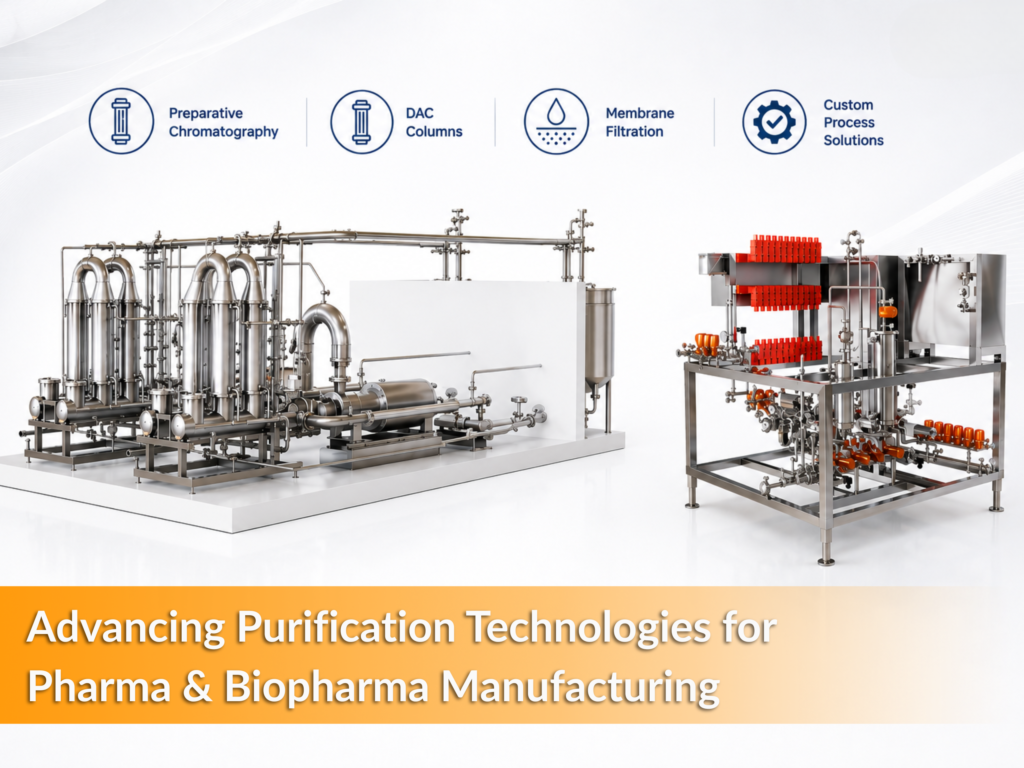
- Cassette-based, hollow fibre, spiral wound, and ceramic all configurations
- Scalable from 500 mL lab trials to full production skids
- CIP/SIP-ready with customizable built-in automation and sensor integration
- Compatible with membranes from all major global manufacturers
- Delivered, installed, validated, and supported from India no import lead times
We are not a distributor. We are a manufacturer. That means you get a system built for your process, not a catalogue product retrofitted to your line.
Founder and MD Mr. Nilesh Badani leads every major customer engagement personally. When you work with Sanitech, you are working with the people who actually engineer your solution.
The working principle exactly how TFF separates molecules
In conventional dead-end filtration, feed flows directly into the membrane. Solids accumulate on the surface and block it quickly. You stop. You clean or replace. Throughput suffers.
In TFF, feed flows parallel (tangential) to the membrane surface, not into it. This sweeping action continuously carries accumulated particles away. The membrane stays clean. The process continues.
The three things happening simultaneously in a TFF system:
- Crossflow sweeping Feed is pumped at controlled velocity across the membrane surface, preventing fouling layer build up.
- Transmembrane pressure (TMP) A pressure differential drives small molecules (permeate: water, salts, small solutes) through the membrane. Large molecules (retentate: proteins, cells, biomolecules) are retained.
- Recirculation – The retained product cycles back through the loop, concentrating with each pass until your target concentration or volume is reached.
The result: continuous, gentle, scalable separation without the stops and starts of conventional methods.
TFF unit operations what you can actually do with it
Four core operations on a single TFF system: |
|
|
|
|
Membrane types and when to use each
Membrane Type | Best For | Key Advantage |
Cassette | Pharma, biopharma, high-value products | High flux, reusable, GMP-compliant |
Hollow Fibre | Shear-sensitive materials (cell culture, lentivirus) | Gentle, low shear, low holdup volume |
Spiral Wound | Large-volume, cost-sensitive applications | Low cost per sq. metre, high area per module |
Ceramic | Harsh solvents, high temp, aggressive CIP | Longest lifespan, chemically resistant |
Buying a TFF system is not like buying a pump or a tank. It is a process investment. Here is what to evaluate:
- Membrane compatibility: Does the system accept membranes from multiple vendors, or is it locked to one supplier?
- CIP/SIP integration: Is cleaning validated? Can membranes be reused 50+ cycles with documented testing?
- Automation level: Semi-auto for lab/pilot, full PLC/SCADA for production. What does your team need today and in 3 years?
- Validation support: Does the supplier provide IQ/OQ/PQ documentation for regulatory submissions?
- Lead time and spares: Indian manufacturer = 6–10-week delivery vs 20–30 weeks for imports. Spares available domestically.
- Scalability path: Can you run the same process parameters on the lab skid and the production skid? Sanitech ensures this by design.
What you see, what you control, what you watch
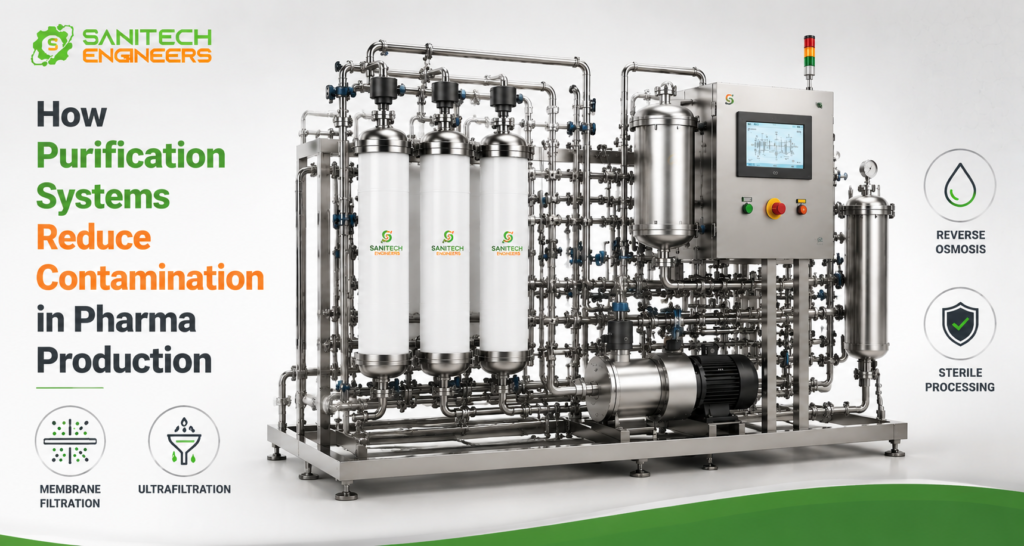
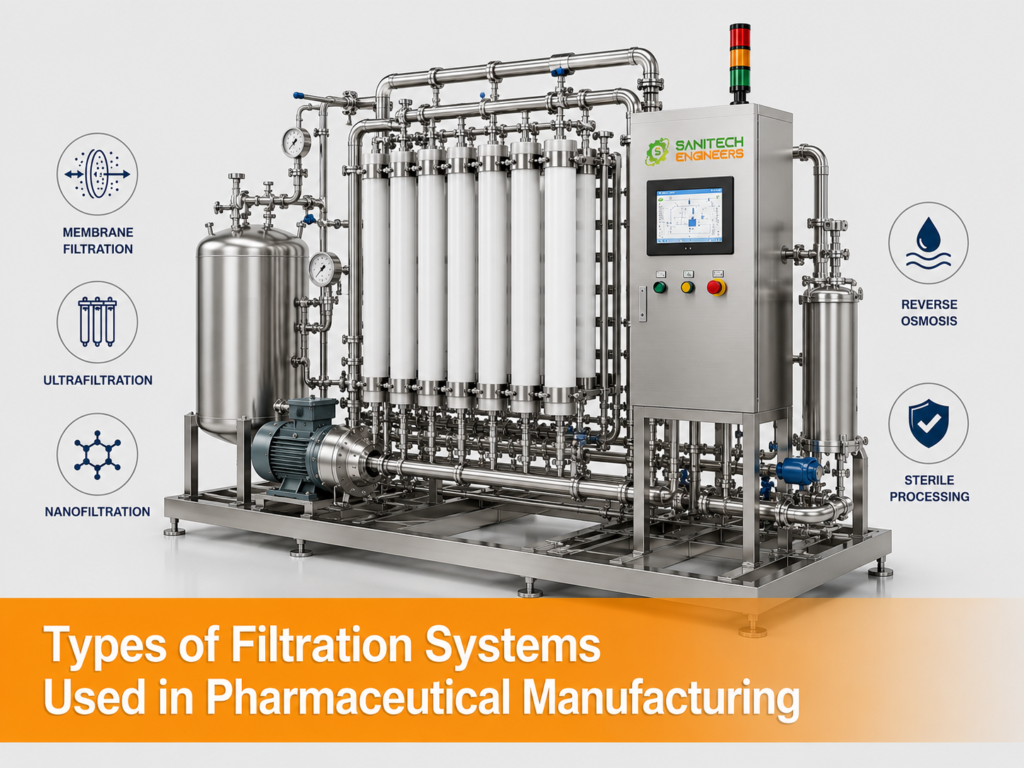
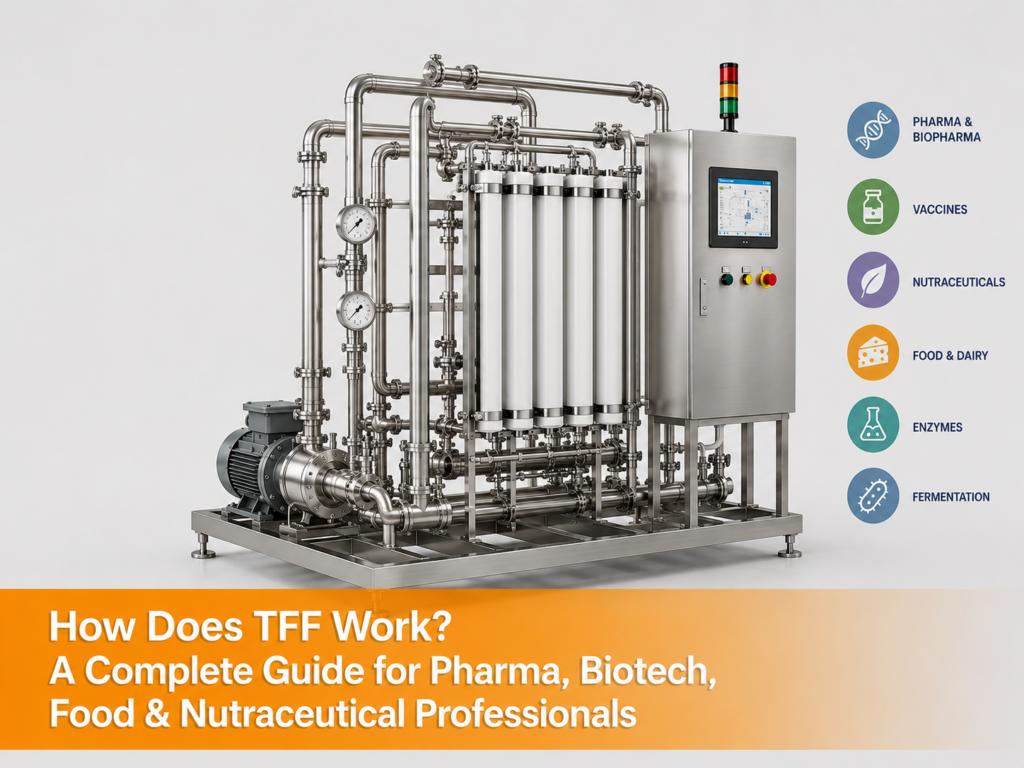
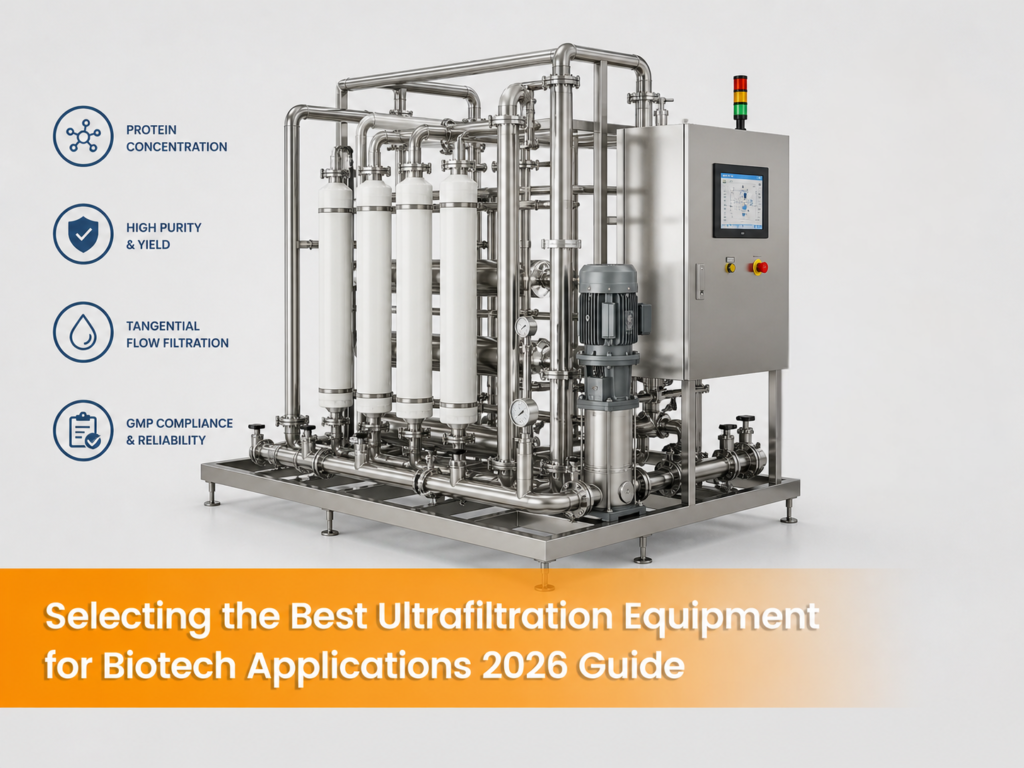
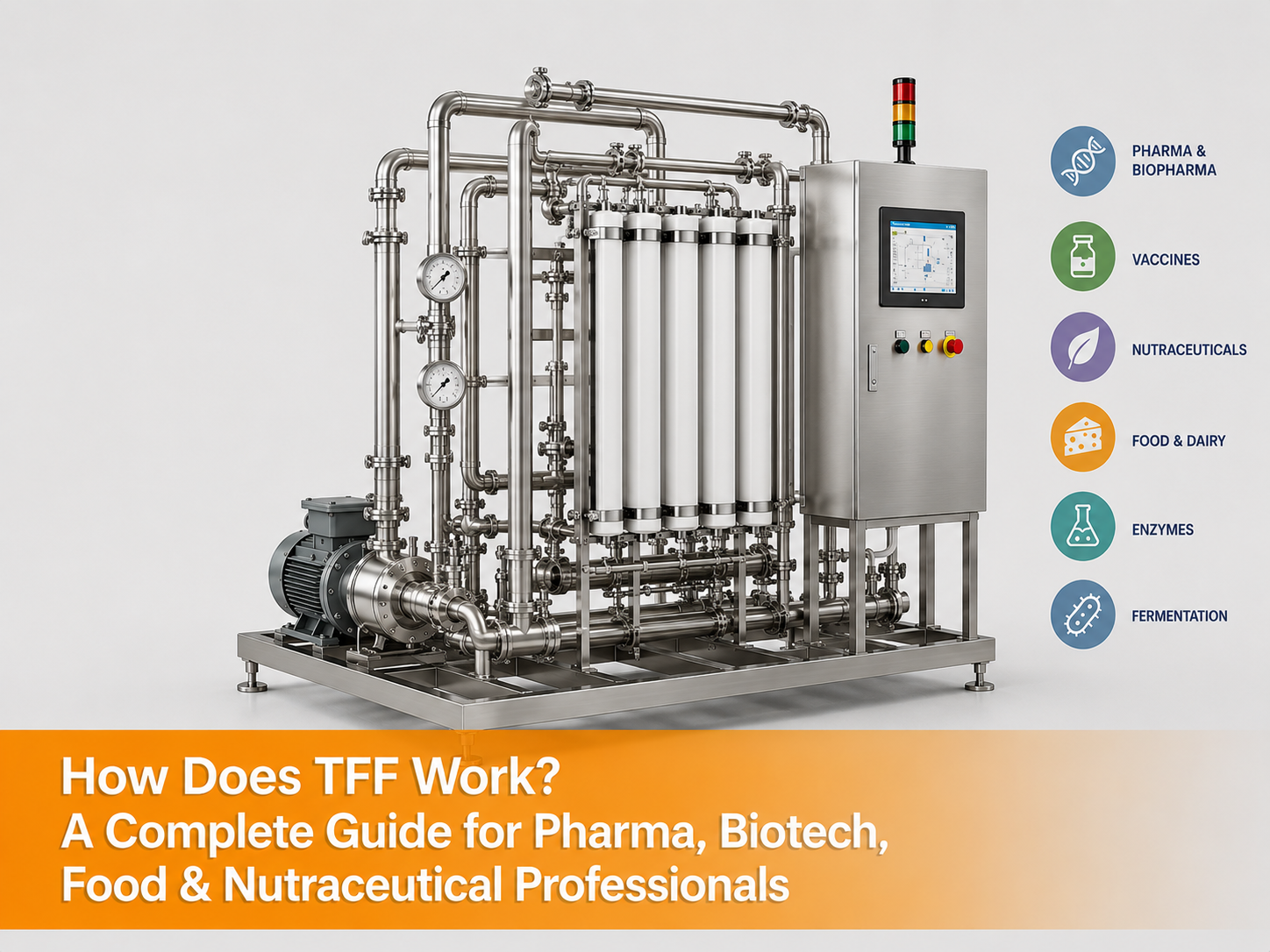
A TFF system has six key components that you will interact with daily:
- Feed vessel / retentate vessel: Holds your starting material. Stainless steel (SS316L) or single-use bag, depending on your process.
- Feed pump: Rotary lobe (most common in pharma) or diaphragm pump. Controls crossflow velocity. Gentle on shear-sensitive products.
- Membrane module: Cassette, hollow fibre, or spiral. Selected based on your molecule’s size and sensitivity. MWCO from 100 Da (NF) to 0.45 micron (MF), spanning entire spectrum of UF in it.
- Pressure gauges / transducers: You monitor inlet pressure (Pi), retentate pressure (Pr), and permeate pressure (Pp). TMP = [(Pi + Pr)/2] − Pp.
- Flow meters: Crossflow rate and permeate flux are your two primary process variables.
Permeate line: Where the filtered (through-membrane) liquid exits. In concentration mode, this is waste. In fractionation, it may be your product.
A typical concentration run- step by step
- Pre-use clean water flux (CWF) check: Wet the membrane with buffer. Measure normalised water permeability to confirm membrane integrity.
- Equilibration: Flush with process buffer. Condition membrane to your pH and ionic strength.
- Load: Transfer your feed. Start pump at low crossflow. Gradually increase to target velocity (typically 4–6 LMH for UF cassettes).
- Concentration: Monitor retentate volume. Adjust TMP (0.5–2.0 bar for most UF). Watch for flux decline a sign of fouling.
- Diafiltration (if needed): Add buffer to retentate vessel at same rate as permeate flux. Run 5–7 dia volumes for >99% buffer exchange.
- Recovery: Flush membrane with small buffer volume. Recover product from retentate line and flush volume.
- CIP: Clean with NaOH (0.1–0.5 N), water flush, optional acid wash. Post-CIP clean water flux confirms membrane restoration.
Common troubleshooting questions
Problem | Likely Cause | Fix |
Flux declining faster than expected | TMP too high / fouling | Reduce TMP, check crossflow velocity |
Protein in permeate (low retention) | Wrong MWCO / membrane damaged | Verify MWCO, run NWP integrity test |
Slow concentration | Low pump speed / high viscosity | Increase crossflow, dilute feed |
Product precipitation in vessel | Over-concentration | Reduce target Cf, add buffer flush step |
High pressure drop across cassette | Fouling or blocked feed channels | Run CIP, check feed for particulates |
Which Industries Use TFF and For What?
Industry | Application | Sanitech Scale Offered |
Biopharmaceuticals | mAb concentration, viral vector purification, plasmid DNA, mRNA/LNP formulation | Lab → Pilot → Production |
Pharmaceutical / API | Enzyme purification, peptide concentration, antibiotic processing | Lab → Pilot → Production |
Vaccines | Antigen concentration, inactivated virus processing, adjuvant formulation | Pilot → Production |
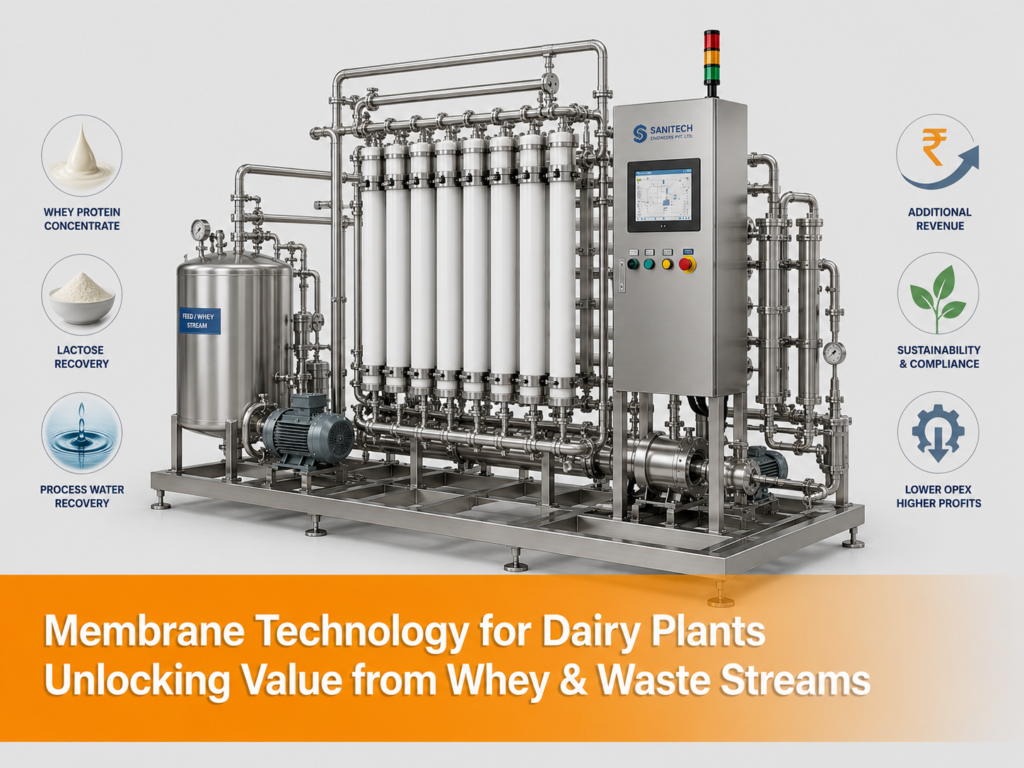
Nutraceuticals | Whey protein concentrate, plant extract concentration, bioactive peptides | Pilot → Industrial |
Food & Dairy | WPC-35 to WPC-80 processing, lactose removal, milk protein fractionation | Industrial scale |
Enzymes | Lipase, protease, amylase concentration for industrial applications | Lab → Production |
Fermentation | Cell harvesting, clarification of fermentation broth, spent media processing | All scales |
Conclusion
Tangential Flow Filtration (TFF) has become a vital part of modern pharma, biotech, food, and nutraceutical processing due to its ability to deliver higher recovery, better efficiency, and scalable performance. The real value lies not just in using TFF, but in choosing a system designed for your specific process and growth needs. With engineered, scalable, and GMP-ready solutions, Sanitech Engineers helps industries achieve reliable and cost-effective filtration with confidence.
FAQs
Yes. Our low shear pumping system are specifically designed for shear-sensitive products (enveloped viruses, certain cells, fragile proteins). The laminar flow applies minimal mechanical stress. We help you select the right membrane and module geometry for your molecule.
Our lab-scale systems handle feeds from 500 mL to 5 L. Pilot systems from 15 L to 50 L. Semi-Pilot systems from 50 L to 250 L. Production skids from 250 L to 5000+ L. We help you define the right starting scale and build your scalability roadmap.
This is the core strength of TFF. Sanitech designs lab and production skids on the same process basis same TMP targets, same crossflow velocity, same membrane chemistry. Scale-up is a matter of membrane area, not a new process development exercise.
Properly cleaned and stored membranes run 50 to 100+ cycles in validated pharma processes. We provide flux testing protocols and cleaning SOP documentation. Membrane reuse is a major OPEX advantage over centrifuge rotors or single-use depth filters.
Yes. All Sanitech TFF systems are designed and built to cGMP standards. We provide IQ/OQ documentation, material certificates (SS316L contact parts), and full traceability. Systems are designed for FDA/WHO inspectable facilities.