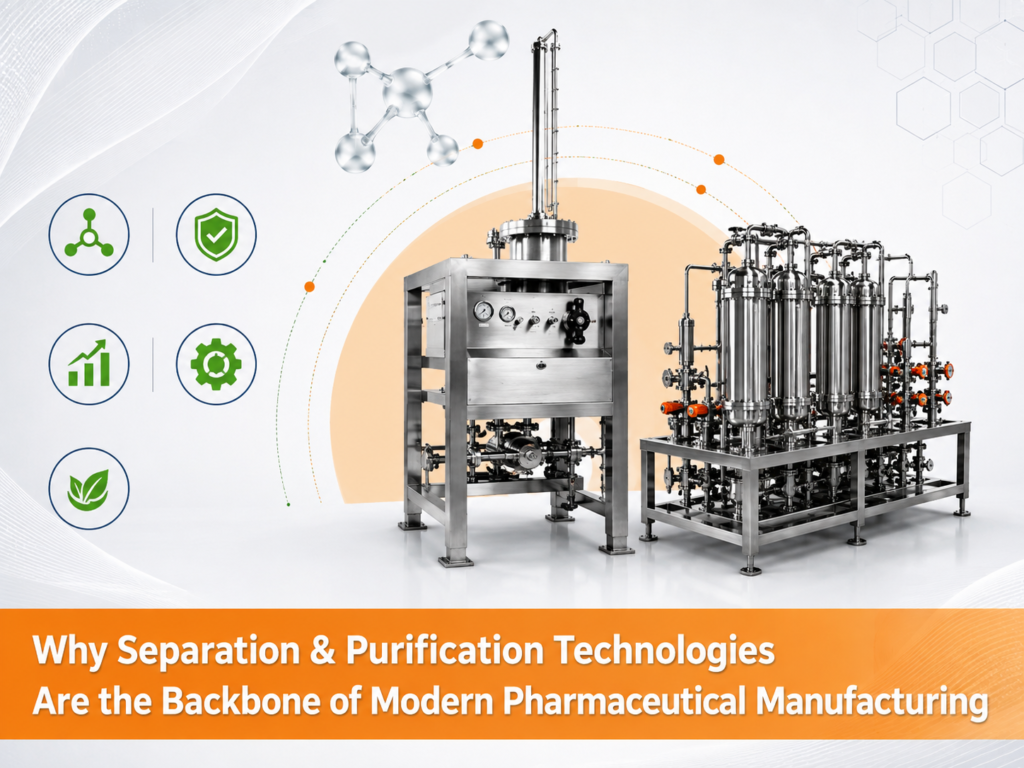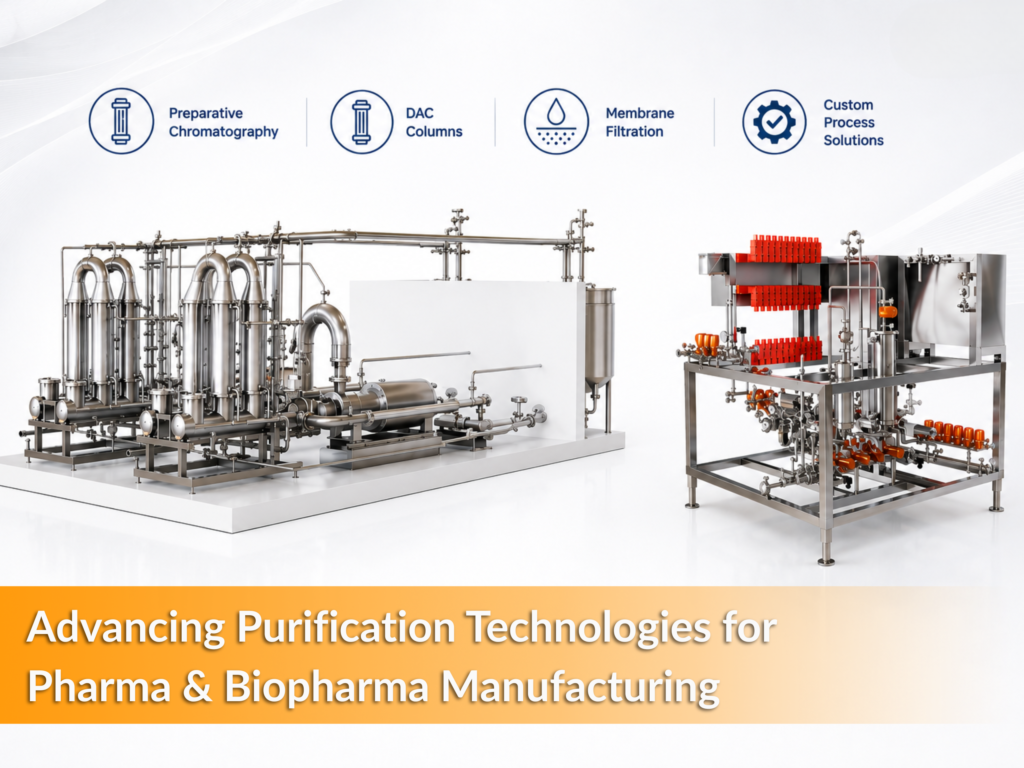
As pharmaceutical products become more complex, Advanced Purification Technologies for Pharma and Biopharma manufacturing have become essential for maintaining product quality, process efficiency, and regulatory compliance. Every medicine starts as a mixture, not a finished product. Somewhere in a plant, engineers pull the useful part out and remove everything else. That step is called purification, and it decides whether a drug is safe to use. As biologics and other complex products take over the market, purification technology for Pharma and Biopharma manufacturing has moved right along with them to keep up the pace with the changing production needs.
Pharma and biopharma companies now make more complex products than ever before. Biologics, peptides, and monoclonal antibodies need careful handling. Rough handling can damage them. Many older systems were never designed for products this fragile.
In this blog, we’ll look at the advanced purification technologies shaping pharma and biopharma manufacturing today, and why picking the right one matters.
Why Purification Technologies Sit at the Centre of the Process
Purification can turn a molecule into a usable product. Or it can leave you with a batch you have to throw away. There is very little room for error. A contaminated or under-purified batch wastes raw materials, costs time, and can trigger regulatory trouble. In the worst cases, it can put patients at risk.
This is why manufacturers look at a few practical things. They check how much product comes out, how well the process runs, and what it costs each day. They also check whether the setup still works when production doubles. Compliance matters at every step and none of it counts for much if a system can’t deliver the same results every time, even when everything looks right on paper.
The Purification Technologies Doing Most of the Work
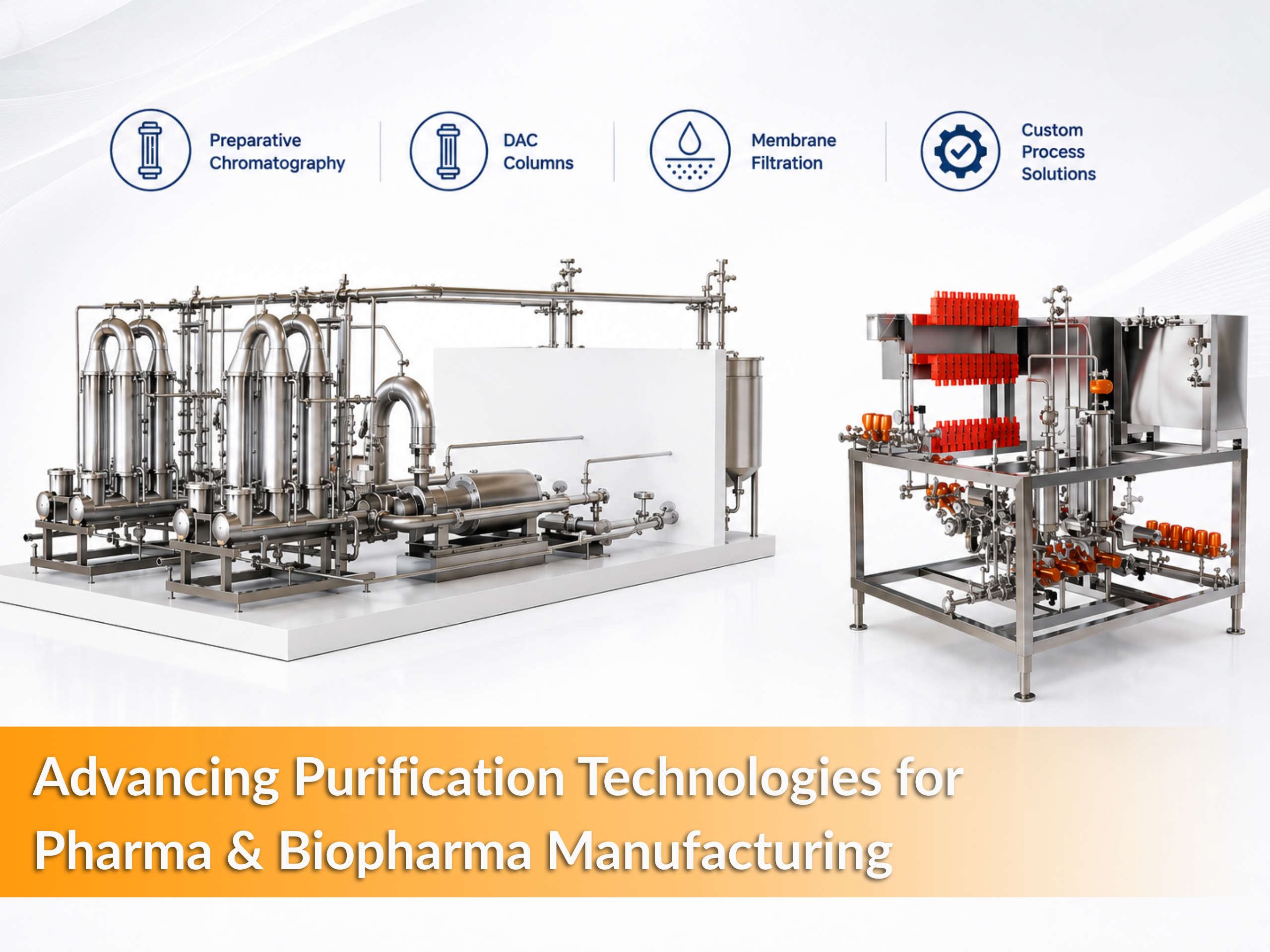
Preparative Chromatography
Chromatography has been the standard way to separate a target molecule from a mixture for decades. What has changed is how consistent modern systems have become at holding that separation steady.
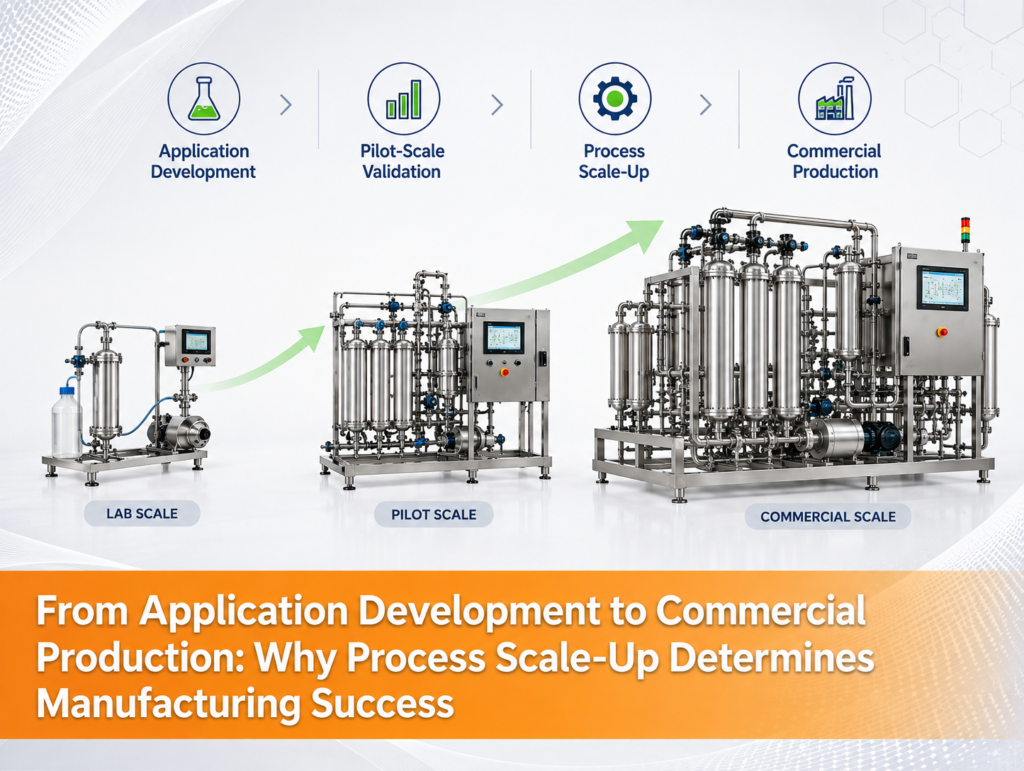
A well-built chromatography system keeps its purity and recovery numbers steady from one run to the next. It should do that whether you’re running a small lab batch or a full commercial lot. That second part is where many systems fail quietly. A separation that works well at five litres may behave differently at five hundred litres. Finding that out after scale-up can be costly.
This technology is the backbone of API purification, peptide purification, protein purification, and monoclonal antibody processing in most biopharma plants today.
DAC Columns
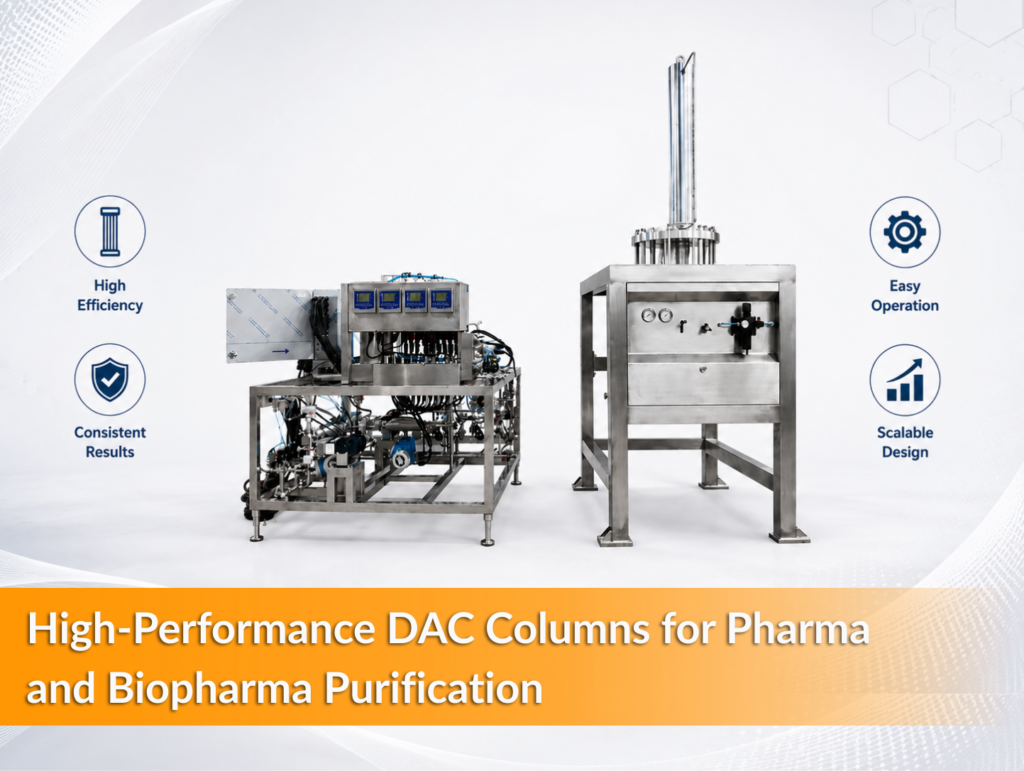
Dynamic Axial Compression columns solve one specific problem: uneven bed packing. When a column isn’t packed evenly, fluid channels through it unpredictably. Resolution drops, and no two runs behave the same way. That can create problems during a regulatory audit.
DAC columns keep the packed bed under constant, even pressure. That’s why manufacturers trust them. Channeling is reduced, separation improves, and the column keeps performing well for a long time. Scale-up also gets much easier because the packing stays consistent as the column gets bigger
For teams that need the tenth production run to look like the first one, this is usually the equipment that makes that possible.
Membrane Filtration Systems
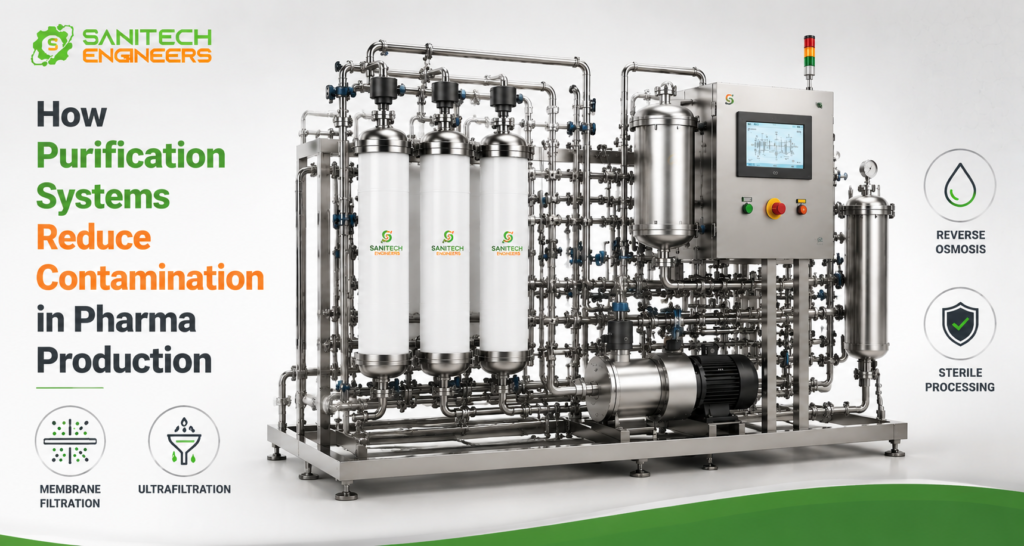
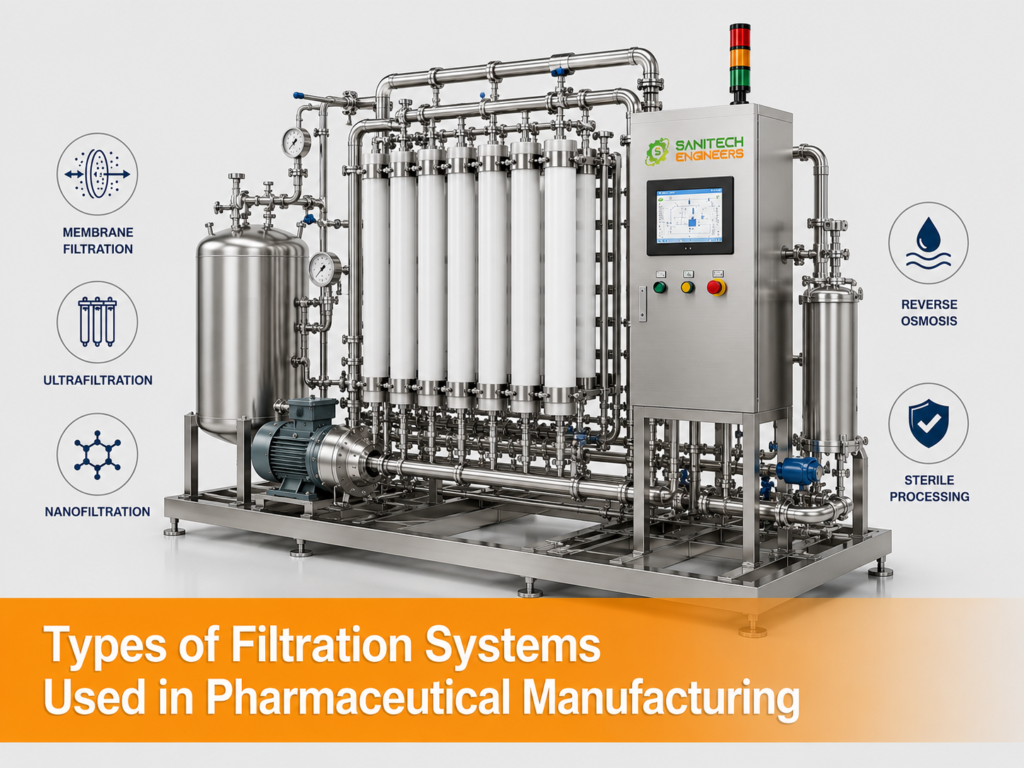
Membranes work on a different principle. Instead of separating by chemistry, the way chromatography does, they separate by size. That usually means faster processing and much less solvent going to waste.
Technology | What it’s Good For |
Microfiltration (MF) | Removes larger particles, cells, and cell debris |
Ultrafiltration (UF) | Concentrates proteins and retains viruses and endotoxins |
Nanofiltration (NF) | Separates smaller molecules such as sugars and salts |
Process Reverse Osmosis (pRO) | Produces high-purity water and concentrates process streams |
Diafiltration (DF) Tangential Flow Filtration (TFF) | Performs buffer exchange and desalting while minimizing membrane clogging Cassette setup Especially for Biopharma products where in the process solutions are high value and low volume |
This work rarely gets noticed. Protein concentration, buffer exchange, desalting, and pyrogen removal don’t get much attention. But if you miss one of these steps, the problem often shows up later. By then, it’s much harder to work out what went wrong.
If you’re evaluating membrane-based separation methods, read our guide on Depth Filtration vs Membrane Filtration in Bioprocessing.
How to Choose the Right Purification Technology
There’s no single “best” option. The right choice depends on your molecule, your batch size, and how much your process needs to grow. A few questions can help narrow the options.
- Is the target molecule stable, or does it break down under pressure and heat?
- Do you need to remove large contaminants or separate molecules that are close in size?
- Will this process stay small, or does it need to scale to commercial volumes soon?
- How tight are your cleaning validation and turnaround requirements?
Most plants end up using more than one technology together. Chromatography might isolate the target molecule. Membrane systems then take care of concentration and buffer exchange. They solve different problems in the same process.
Why the Engineering Around Purification Technologies Matters Just as Much
No two pharma processes look exactly alike, even when the end product is similar. Off-the-shelf equipment can only take you so far. Your process may need something different as fluid properties, throughput needs, or cleaning validation requirements change. The standard design may no longer fit your process.
Manufacturers who get the most from purification technologies involve an engineering partner early. They don’t wait until the equipment has already been chosen. That includes process development, detailed engineering, automation, and skid manufacturing. It also covers Factory Acceptance Testing before the equipment ships, installation support, and help with validation. Once the system is running, someone still needs to be available when adjustments are needed months later.
Building the system around the actual process, instead of adjusting the process to fit whatever equipment is available, is usually what separates a system that works from one that keeps working for years.
Learn how engineering is driving innovation in India’s biopharma industry and supporting scalable pharmaceutical manufacturing.
Conclusion
Purification stopped being a box to tick a while ago. It affects yield, cost, audit outcomes, and how fast a process can move from a lab bench to full production. Some processes need chromatography to isolate a high-value molecule. Others need a membrane system for routine downstream steps. The best equipment is the one that fits your process. Whether you’re looking for Preparative Chromatography Systems, DAC Columns, or Membrane Filtration Systems, choosing the right solution starts with understanding your process requirements.
Sanitech Engineers has been designing purification technologies this way for Pharmaceutical and Biopharmaceutical manufacturers across India, from the first conversation through commissioning and ongoing support. Reach out if you want to talk through what your process needs.