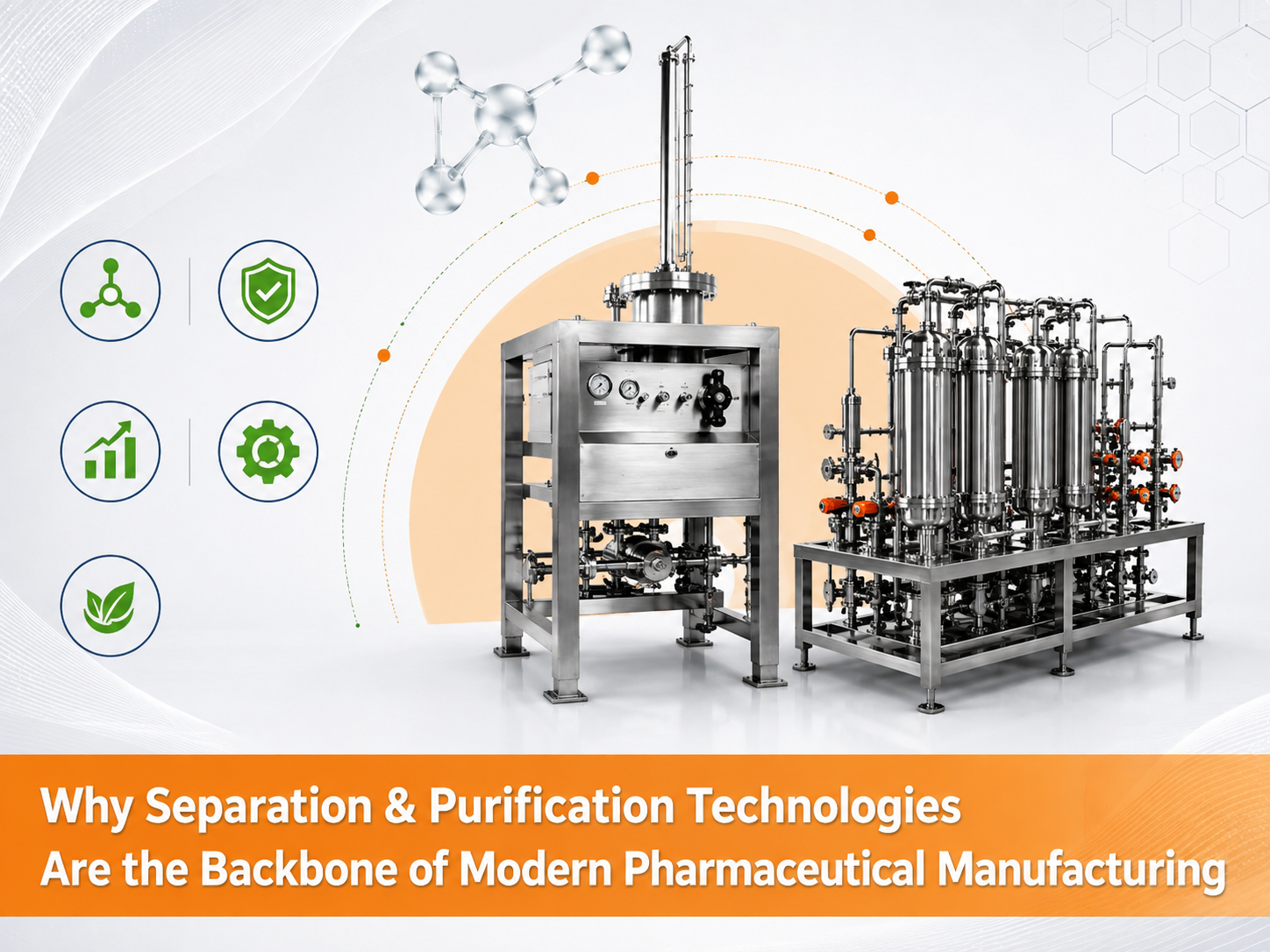
A pharmaceutical product does not acquire value just because it has been made; it is the purification of the product that gives it value. Although all breakthrough molecules begin with a promising molecule, between the time of its discovery and delivery, there is one of the most important and frequently underestimated stages in the manufacturing of pharmaceuticals: separation and purification.
It makes no difference whether the product in question is a monoclonal antibody, a peptide, a vaccine, an active pharmaceutical ingredient (API), a recombinant protein, or a biomolecule obtained by fermentation. The final product must still meet strict requirements for purity, potency, safety, and consistency. Now, even if a highly efficient synthesis or fermentation process manages to achieve high yields, a poorly optimized purification method can lead to product loss and leave impurities behind. As a result, the commercial viability of the process can quickly decline.
Purification involves more than just being a final processing step since it also plays a significant role in product recovery, quality, and process efficiency. Downstream processing is no longer a secondary operation but has instead become a strategic advantage in the present pharmaceutical environment.
Why Purification Has Never Been More Important
The pharmaceutical industry is going through a major change. Together with small-molecule drugs, biologics, biosimilars, cell and gene therapies, peptides, vaccines, and highly potent APIs are becoming more significant. The newer types of products are usually more complex, more sensitive, and a great deal more valuable, so that efficient downstream processing is becoming increasingly important.
At the same time, manufacturers face increasing pressure to:
- Meet stringent global regulatory requirements
- Improve manufacturing efficiency
- Increase product recovery
- Reduce operating costs
- Accelerate time-to-market
- Adopt more sustainable manufacturing practices
This means that downstream purification is one of the most important factors affecting the overall performance of the process. If manufacturers adopt the correct purification strategy, they will be able to keep product quality, improve recovery, and make better use of resources during the manufacturing process.
For high-value biologics, even a minor increase in recovery can result in considerable commercial value throughout the lifetime of the product.
Different Products Require Different Purification Strategies
No two pharmaceutical processes are exactly the same. The appropriate purification strategy varies according to the product, the process stream, and the degree of separation needed.
The technology that is most suitable can be determined taking into account a number of factors, including molecular size, the stability of the product, the composition of the feed, the impurity profile, the required purity, the production volume, and the downstream requirements.
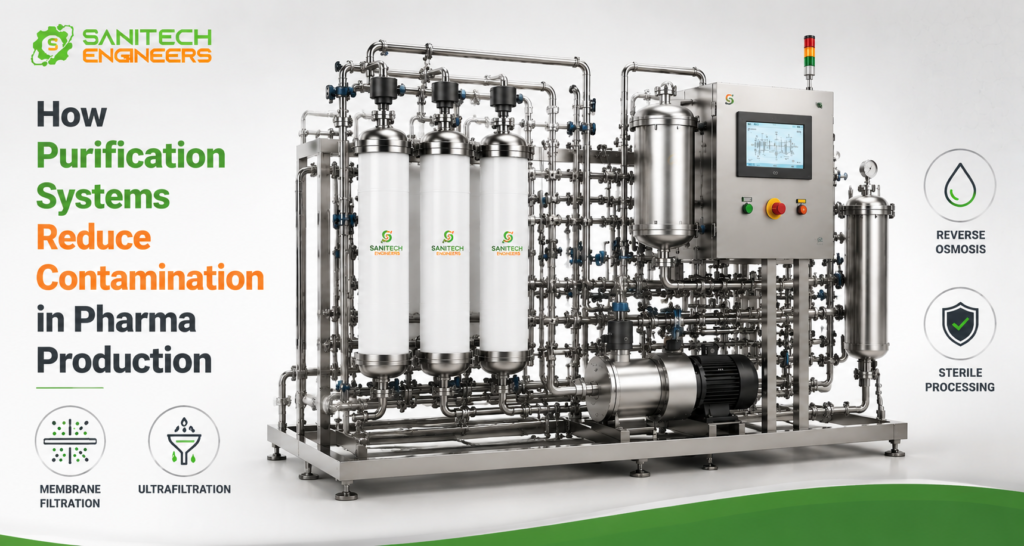
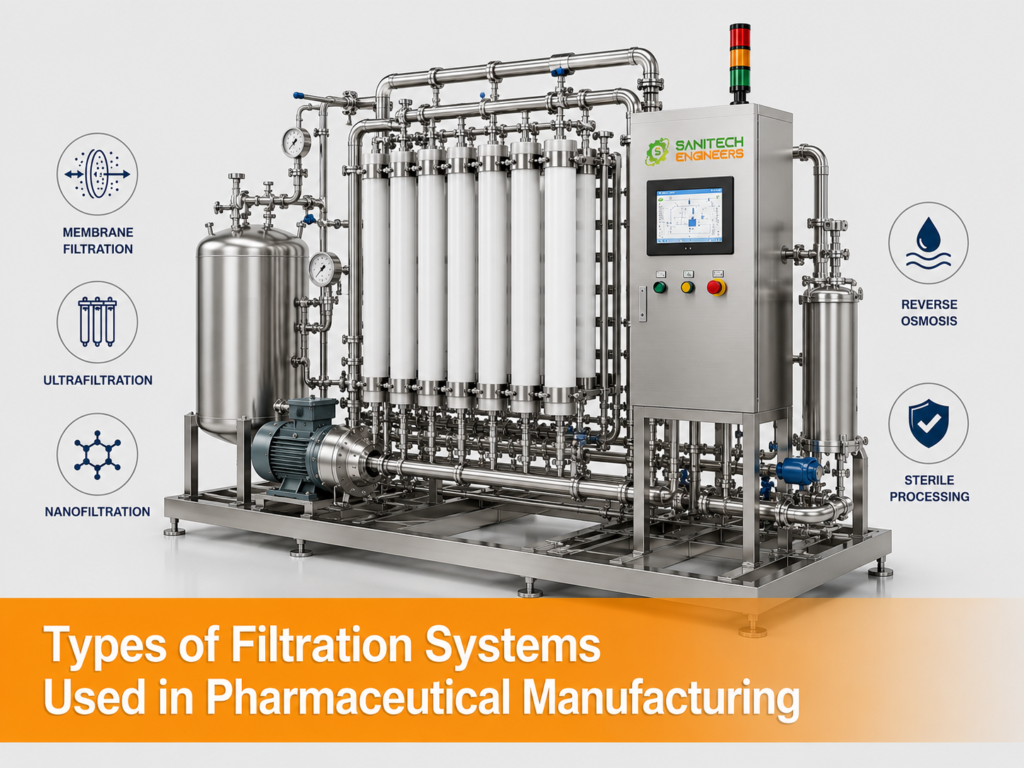
For example, membrane filtration may be used for clarification, concentration, or buffer exchange, while chromatography can achieve the selective separation needed to remove closely related impurities.
The technology used by manufacturers will depend on the particular application, and in some cases they may use one method or combine a number of separation steps in order to obtain the desired level of purity, recovery, and process efficiency.
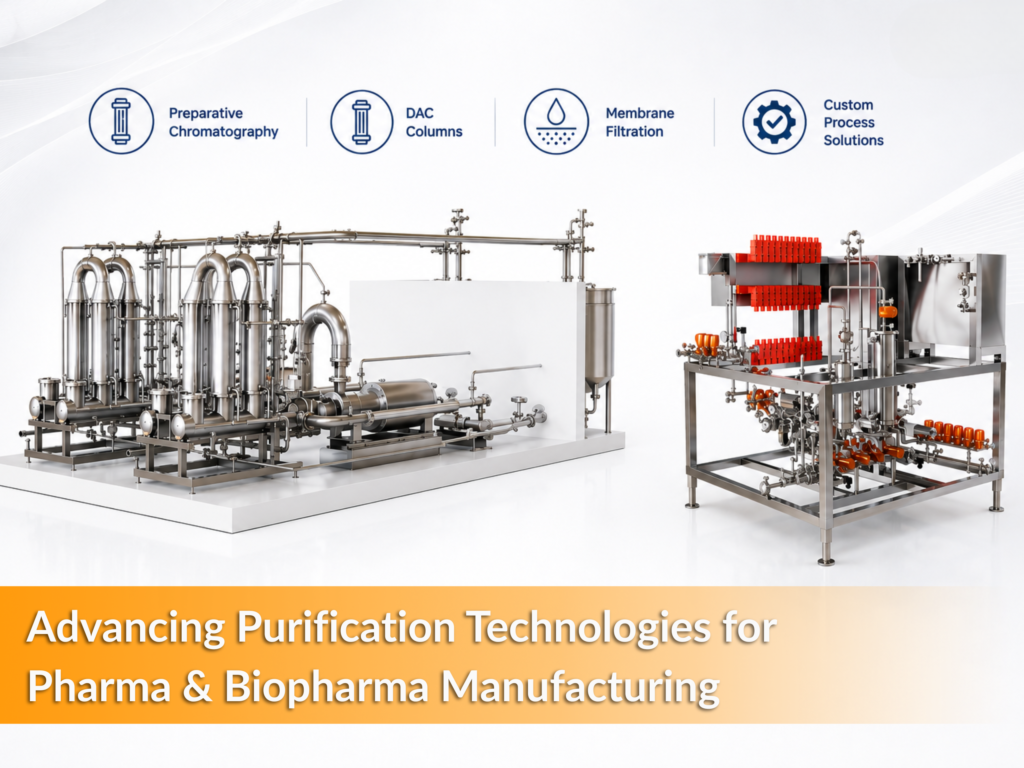
Preparative Chromatography
Preparative chromatography achieves a selective separation and a high-purity recovery by means of the different properties such as charge, size, hydrophobicity, or affinity.
It is commonly used for:
- API purification
- Peptide and oligonucleotide purification
- Protein and monoclonal antibody processing
- Natural product and botanical extract purification
- High-value pharmaceutical intermediates
When exceptional purity and precise separation are required, preparative chromatography remains an effective technology for separating target molecules from closely related impurities. This is especially useful for separating out the target molecules from closely related impurities, which cannot be removed merely by filtration. The choice of chromatography mode, stationary phase, column design, and operating conditions is made based on the product and the separation requirements.
Tangential Flow Filtration (TFF)
Tangential Flow Filtration (TFF) is a membrane process in which the feed flows parallel to the membrane surface in order to reduce the accumulation of retained material and membrane fouling.
It is commonly used for:
- Protein and biomolecule concentration
- Diafiltration and buffer exchange
- Cell harvesting
- Vaccine processing
- Biopharmaceutical manufacturing
TFF enables efficient concentration and separation while helping maintain the quality and recovery of delicate biomolecules. Its scalability also makes it suitable for both process development and commercial production.
Microfiltration (MF)
Microfiltration (MF) is primarily employed for clarification and for the removal of particles. It achieves this by means of membranes which have relatively large pores and which are used to remove suspended solids, microorganisms, cells, and cell debris from process streams.
It is commonly used for:
- Cell and biomass removal
- Fermentation broth clarification
- Sterile pre-filtration
- Endotoxin removal
- Removal of suspended solids
MF can help protect the membranes and the purification systems downstream by reducing the solids load at an early stage in the process.
Ultrafiltration (UF)
Ultrafiltration (UF) involves the use of a semi-permeable membrane which allows smaller molecules to pass through while retaining proteins and other macromolecules; it is usually employed for concentration and buffer exchange.
Typical applications include:
- Protein and enzyme concentration
- Buffer exchange and diafiltration
- Biomolecule processing
- Removal of low-molecular-weight components
UF allows for controlled concentration and separation while at the same time ensuring good product recovery and scalability.
Nanofiltration (NF)
Nanofiltration (NF) lies between ultrafiltration and reverse osmosis, enabling the selective removal of small molecules and multivalent ions while at the same time retaining the larger components.
It can be used for:
- Partial desalting
- Solvent recovery
- Removal of selected low-molecular-weight compounds
- Concentration of specialty chemicals
- Treatment of process streams
NF is useful in the case where a process needs a more detailed separation than that provided by UF but does not need the more precise separation given by RO.
Reverse Osmosis (RO)
Reverse osmosis (RO) removes from water the dissolved salts, ions, and other small contaminants by means of a semi-permeable membrane. It is commonly used as a component of water-treatment systems in the manufacture of pharmaceuticals.
Applications include:
- Process water purification
- Process water generation
- Pretreatment for high-purity water systems
- Reduction of dissolved salts and contaminants
- Solvent concentration
- Industrial and utility water treatment
RO helps to ensure that the water quality remains consistent for various processes in which the quality of the feed water can have an effect on the operations that come afterwards.
The Engineering Behind Successful Purification
Choosing the appropriate technology is only the first thing to do; the purification system also has to be designed with the product, the characteristics of the feed, the process conditions, and the production objectives in mind.
Key considerations include:
- What degree of purity and what degree of recovery are required?
- How sensitive is the product to shear, pressure, temperature, or pH?
- What kind of membrane and what molecular weight cut-off should be used?
- What type of chromatography and what stationary phase are required for the separation?
- How can membrane fouling be controlled without it causing a decrease in throughput?
- How much water, buffer, or solvent does the process require?
- Is it possible to reliably scale the process from a laboratory environment to commercial production?
The manner in which these decisions are made has a direct impact on product quality, recovery, throughput, operating costs, and scale-up performance, and overall commercial success.
From Process Development to Commercial Manufacturing
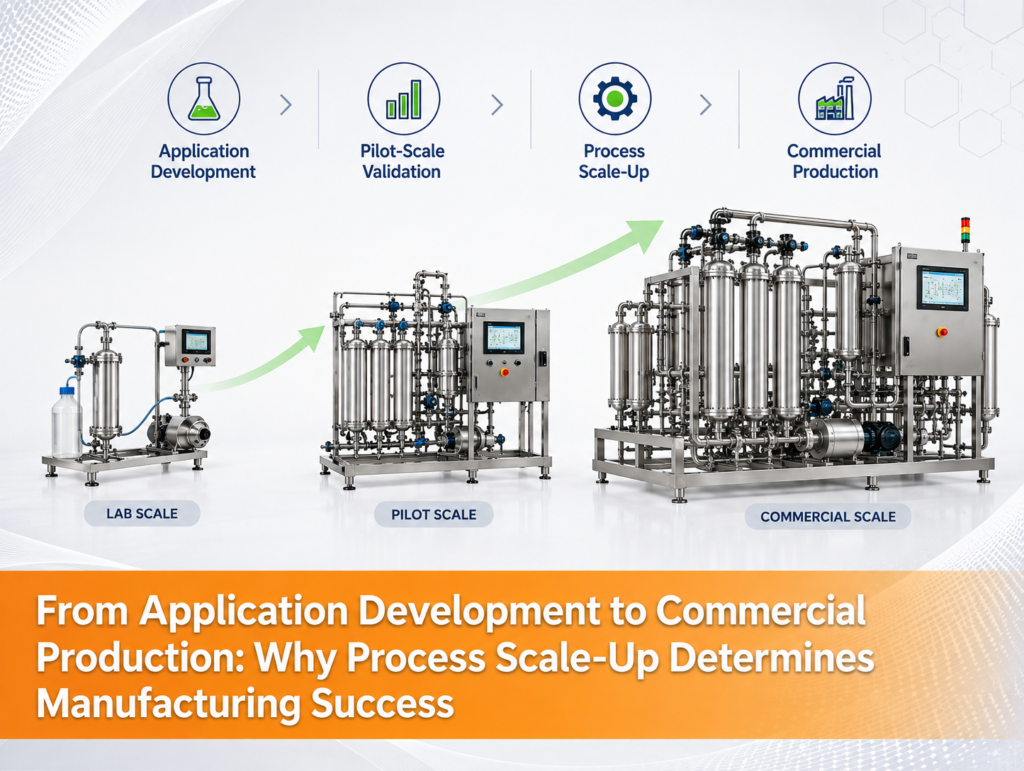
A purification process that works well at laboratory scale may not perform the same way at pilot or commercial scale. Changes in flow rate, membrane area, pressure, mixing, fouling, and equipment configuration can all influence the final results. Process development, pilot trials, and engineering optimization make it possible to identify these problems before full-scale production takes place. They enable the engineers to test the operating conditions, optimise the process, and set up the parameters needed for reliable scale-up.
Using a structured scale-up method not only reduces the technical risks involved when putting the process into commercial use but also enhances reproducibility, process efficiency, and manufacturing reliability.
Separation and Purification Across Industries
Separation and purification techniques are applied in a variety of industries, including pharmaceuticals, biopharmaceuticals, food, nutraceuticals, and chemicals. The specific technology and process design will depend on the product and the separation needs.
Common applications include:
- Biopharmaceuticals and biologics
- Active Pharmaceutical Ingredients (APIs)
- Peptides and oligonucleotides
- Vaccines, biologics, and recombinant proteins
- Fermentation products
- Nutraceuticals and botanical extracts
- Dairy proteins and whey processing
- Specialty chemicals
Across all these applications, the focus remains on efficient separation, high product recovery, consistent quality, and reliable process performance.
Beyond Equipment: Engineering Better Purification Processes
Effective purification begins with understanding the process rather than simply selecting a piece of equipment.
At Sanitech Engineers, we begin by evaluating the product, feed characteristics, separation requirements, and scale of operation. This approach enables us to detect any process bottlenecks and to design a system that is appropriate for the application.
Our capabilities include:
- Membrane Filtration Systems
- Tangential Flow Filtration (TFF)
- Preparative Chromatography Systems
- Process Development and Application Trials
- Pilot-Scale Trials and Validation
- Commercial-Scale System Engineering
- Automation and GMP-Compliant Solutions
By combining separation technologies with application-specific engineering, Sanitech Engineers supports the development of purification processes that are efficient, scalable, and reproducible.
The Future of Pharmaceutical Purification
Since peptides, advanced therapies, and other complex products are becoming more widespread, pharmaceutical manufacturers will need downstream processes that are efficient, scalable, and consistent.
Future purification processes will increasingly focus on:
- Higher product recovery and purity
- Greater process efficiency
- Lower water, buffer, and solvent consumption
- Reduced operating costs
- Improved automation and process monitoring
- Reliable scale-up from development to commercial production
- Consistent performance across manufacturing batches
As pharmaceutical processes become more complex, separation and purification will play an increasingly important role in manufacturing success. Attention is paid not just to reaching the necessary level of purity but also to doing so efficiently, consistently, and at the required production scale.