Production of life-saving medicine is, to be honest, a high-stakes game. In the bioprocessing industry, a microbe or a dust particle can destroy a multi-million dollar batch within seconds. This is why bioprocessing filtration is not a step in the factory; it is the very heart of the process. It is what makes our vaccines, antibodies, and proteins pure enough to save lives.
Role of Filtration in Bioprocessing
In biopharma, we refer to the process of filtration as clarification. You’re stripping away gunk like cell debris and bacteria without harming the actual medicine. For facilities that operate membrane filters in India, it is not possible to obtain those international safety marks without the best technology. It is a thin line; you have to take the bad stuff and leave the good molecules to go through without any disturbance.
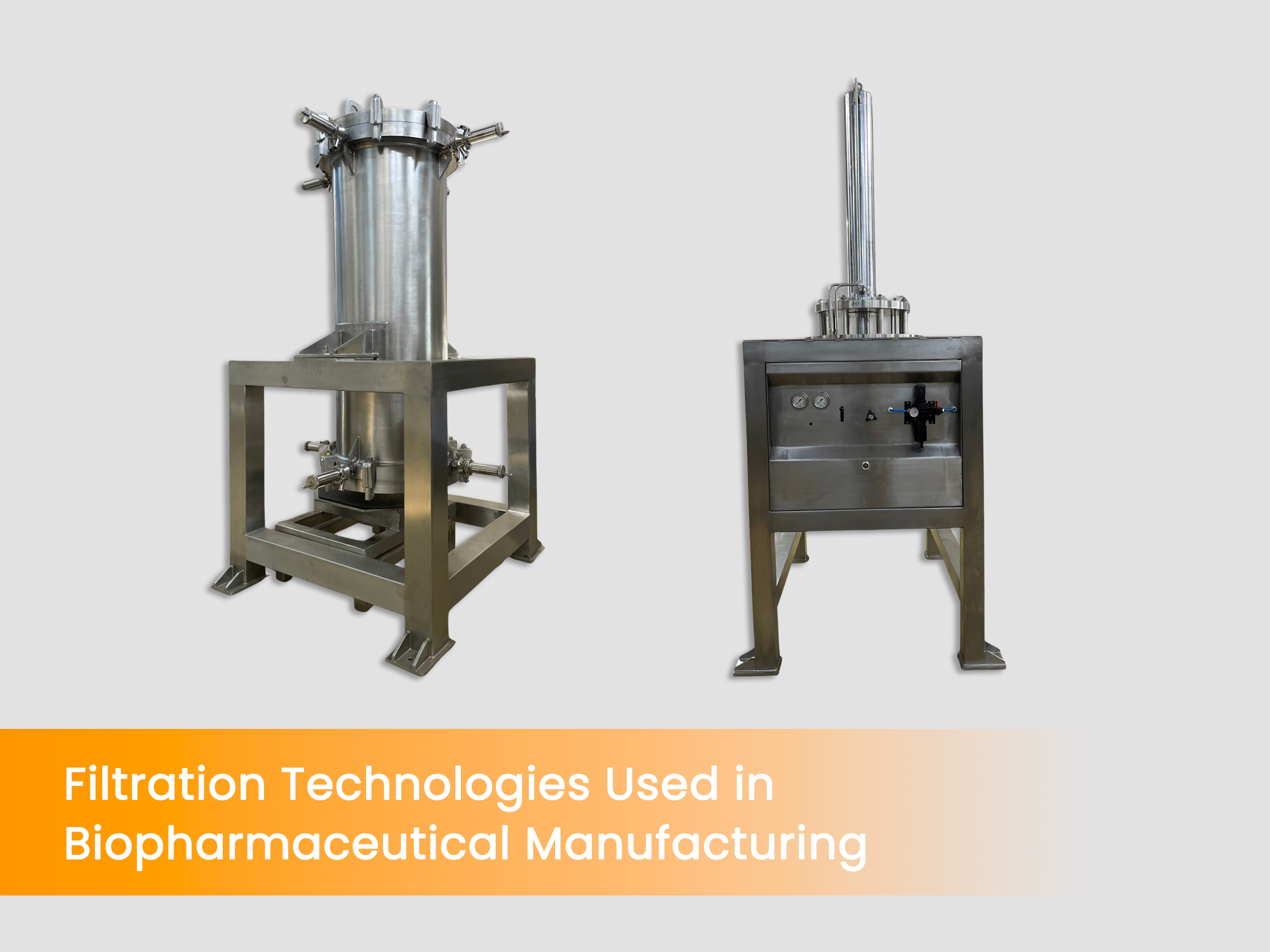
Key Filtration Techniques used in Biopharmaceutical Manufacturing
Applied to cleanse the product without leaving any damage to it. Various production phases require various tools. The following is the breakdown of how the pros do it:
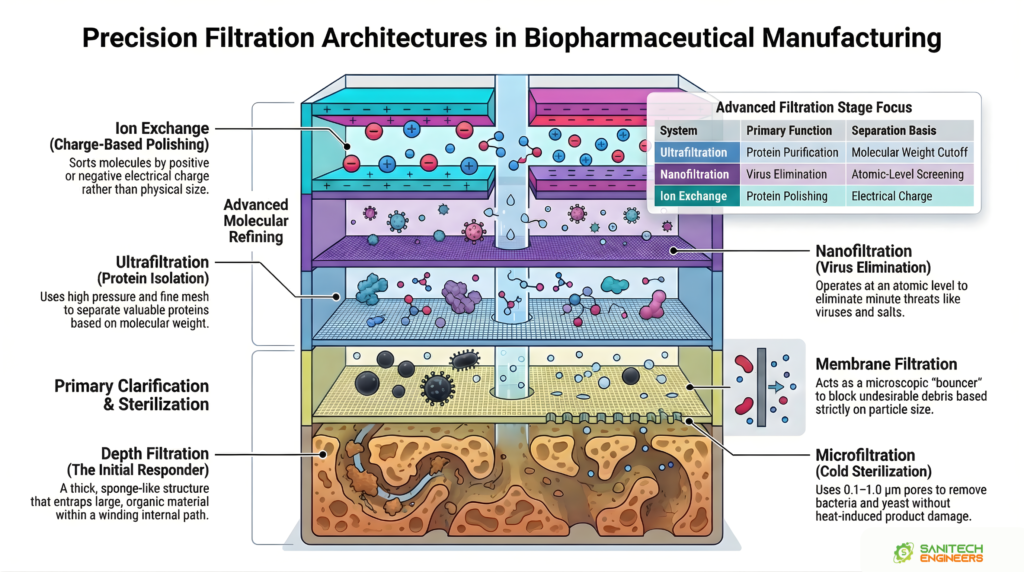
a. Depth Filtration
Suppose that depth filtration is a high-quality and thick sponge. It is not a flat surface but a deep, winding path that entraps particles all over the entire filter body. This is typically the initial responder in a lab, and it is employed at the beginning to clear the large, sloppy organic material.
b. Membrane Filtration
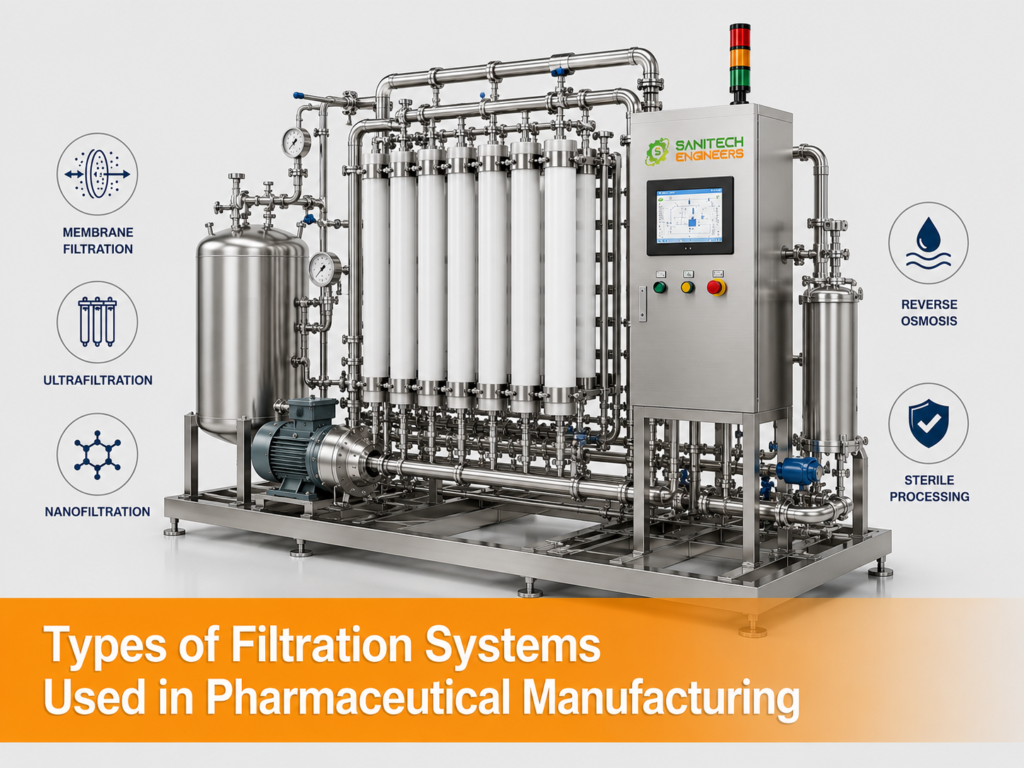
Once the big debris has been removed, the membrane filtration takes the place of the precision work. This uses a super-thin layer, a microscopic bouncer. It allows the correct liquids to pass through, but bangs the door on the undesirable particles depends primarily on size.
c. Microfiltration Systems
When you want to kick out bacteria or yeast, you grab microfiltration systems. These are small pores (0.1-1.0 µm). They are the key to cold sterilisation, washing a liquid without heat, which would otherwise cook and destroy delicate ingredients.
d. Ultrafiltration Systems
Have to isolate a product or purify certain proteins? Ultrafiltration systems have that to do. These apply severe force to force liquid through a fine mesh. The junk passes through, and the valuable proteins remain behind, leaving you with a high-potency product due to the separation based on molecular weight cutoff (MWCO).
e. Nanofiltration in Pharma
This is the filtration special ops. It is primarily applied in desalination or virus elimination. It operates at almost an atomic level to ensure that even the slightest threats are eliminated before the medicine reaches the bottle, i.e., similar to the tight ultrafiltration membranes.
f. Reverse Osmosis System
To have water that must be a blank slate, you require a reverse osmosis system. It withdraws ions and organics to produce Water for Injection (WFI).
g. Ion Exchange Systems
In some cases, it is not the size that counts, but the charge. Molecules are sorted by ion exchange systems according to their electrical charge. These ion exchange applications are enormous in terms of polishing proteins with a given positive or negative pull.
Applications Across Industries
Biopharma is leading in this technology; however, it is widely used in other industries as well:
- Biopharmaceuticals: Assist in vaccine purification by extracting impurities.
- Pharmaceutical: Utilised for drug blending and storing costly solvents.
- Nutraceuticals: Extraction of pure vitamins from raw plants.
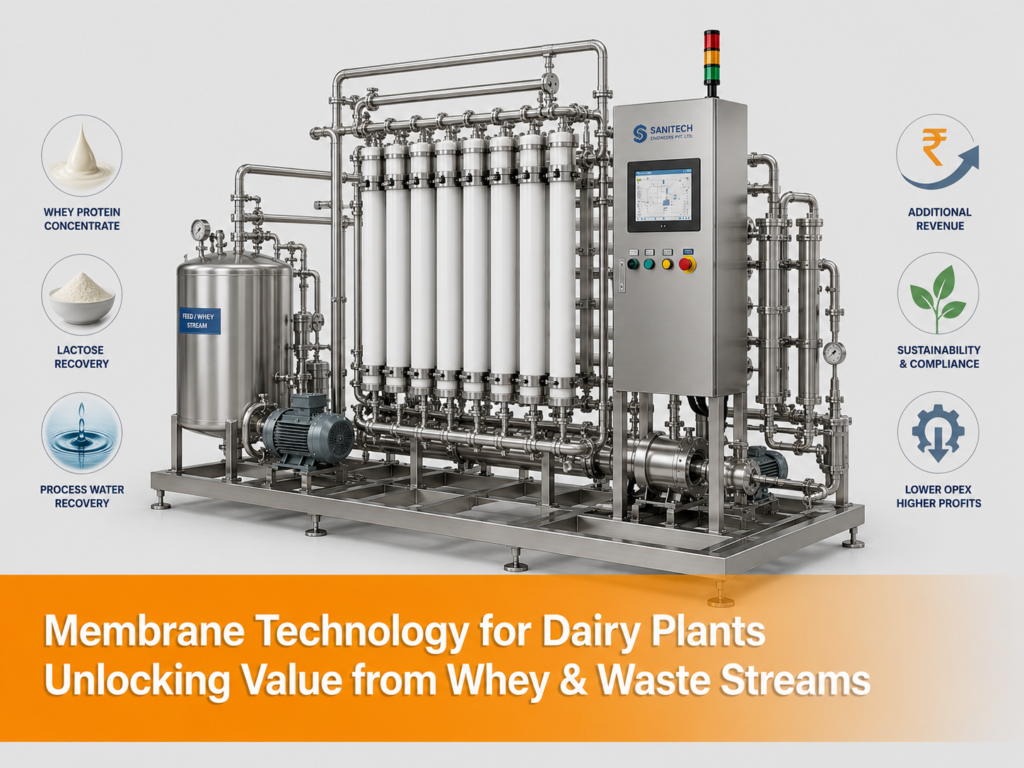
- Dairy: The preparation of whey protein and milk preservation.
- Food & Beverages: Why your juice is clear, and your water is crisp.
- Cosmetics & Ayurveda: The development of clean foundations of skin creams and herbal oils.
Choosing the Right Filtration Technology
You can not simply choose a filter. You must examine the feed stream–in other words, what is in the liquid? Flow speed also has to be considered. Choose the wrong one, and you will have to contend with the so-called clogging that will kill your productivity and waste your product.
Challenges in Biopharmaceutical Filtration.
The foul of membranes is one of the major challenges. It is merely an imaginative expression that the filter was gunked up. To prevent this, engineers must strike a balance between pressure and choose the appropriate materials to use in their biopharmaceutical filtration system.
Future Trends in Filtration Technologies
It is all becoming Single-Use (SUT). Labs are replacing giant steel tanks with high-quality disposable filters instead of cleaning them. It’s faster and way safer. We are also witnessing smart filters that have sensors to inform you when they are going to stop.
Conclusion
The selection of the appropriate bioprocessing filtration system is an enormous task. It determines your innocence, your velocity, and your revenues. You need a partner who has the ropes when it comes to establishing a reverse osmosis system or when you are venturing into the world of ion exchange.
Sanitech Engineers is a leading company in the supply of membrane filtration and ion exchange systems in India. We not only sell equipment but also the brains to engineer to keep your line moving.
Are you willing to clean up your process?
Get a personalised solution with our Membrane Systems or chat with our Biopharma Experts.
FAQs
Pore size. Microfiltration prevents bacteria. To capture viruses and proteins, ultrafiltration is reduced.
It's a "pre-filter." It traps the large stuff before your costly, fragile membranes are destroyed instantly.
No way. In pharma, they are a precision instrument that is employed as a chromatography process for particular proteins depending on their electrical charge.
Sanitech Engineers specialises in heavy-duty filtration systems built specifically for the Indian manufacturing market.